
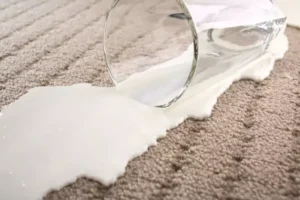
Milk requires immediate attention because proteins and fats break down rapidly into odors that become nearly impossible to eliminate once absorbed into cushion interiors. However, responding too aggressively with water or cleaning products often drives the liquid deeper into padding where it will sour out of reach. The window for effective action is narrow, but rushing through it frequently creates worse problems than the original spill.
What to Do Immediately
Absorbing as much liquid as possible without applying downward pressure is critical, though this becomes harder as panic sets in. Pressing towels or cloths firmly into the spill forces milk into foam layers that cannot be dried or cleaned from the surface. Adding water immediately feels necessary but usually spreads the proteins across a wider area and increases the zone that will eventually smell. Avoid any rubbing motion, as it works the liquid into fiber weave and padding seams. If absorption is incomplete after gentle blotting, stopping is safer than continuing with force.
A Careful Cleaning Approach
Once surface liquid has been removed, the area needs airflow more than additional moisture. A barely damp cloth may address visible residue, but any saturation creates conditions for bacterial growth that produces sour odors within hours. Trapped moisture inside a couch is one of the main reasons odors continue to develop. Fans or open windows help, though they cannot reverse contamination that has already reached interior cushion materials. Testing any cleaning substance on hidden fabric first is essential, as milk residue combined with certain cleaners can create permanent discoloration or stiffening. Checking the area by smell after it has dried completely—not just after it looks clean—reveals whether the spill was truly contained. Many people stop too early because the surface appears fine.
Common Mistakes That Feel Logical
Using hot water seems like it should break down fats, but heat actually bonds milk proteins to fabric fibers and sets stains that were previously removable. Soap or detergent can leave a film that traps odor-causing bacteria and attracts dirt over time. Enzymatic products are marketed for protein stains, but their effectiveness depends on precise application and dwell time that most people misjudge, and they sometimes bleach or weaken upholstery. Assuming the problem is resolved because nothing is visible leads to discovering a sour smell days later when it is too late to address the source. This is why some couch odors seem worse after cleaning rather than better.
When This Approach Is Not Enough
Milk that has penetrated into cushion foam or batting will continue to decompose regardless of surface treatment. Some couch constructions allow liquid to travel along seams and pool in areas that show no external sign of contamination until odor develops. If a sour smell emerges after the visible area has been cleaned and dried, the spill reached depths that home methods cannot access. Removable cushion covers offer slightly more options, but non-removable upholstery often cannot be salvaged once milk has soaked through. Recognizing this early prevents wasting effort on repeated attempts that will not succeed. In situations like this, leaving the couch alone can prevent further damage.
FAQ
How soon does spilled milk start to smell?
The timeline varies, but odor can become noticeable within hours in warm environments or days in cooler ones. The smell indicates bacterial breakdown that cannot be reversed, only contained if the source is still accessible.
What if only a small amount spilled but the smell is strong?
Small volumes can still reach deep into cushions, especially if the fabric is porous or the spill occurred near a seam. The intensity of the odor often reflects how much penetrated rather than how much was visible on the surface.
Can the smell develop even if the area was cleaned immediately?
Yes. If any milk reached interior padding, it will decompose there regardless of how thoroughly the surface was treated. This is why some spills seem resolved initially but produce odor days later.
Is there a difference between whole milk and skim milk for staining or odor?
Both contain proteins that break down into odors, though higher fat content in whole milk can leave visible residue and greasy marks that skim milk might not. Neither is easier to fully remove once absorbed into cushion materials.