
When moisture shows up on a couch, attention usually stays focused on the spot where it appeared. A spill, damp patch, or freshly cleaned section feels like a localized issue. Over time, though, moisture rarely stays confined to one area. Inside a couch, moisture can move quietly and gradually, spreading beyond where it first entered. Understanding this internal movement helps explain why problems sometimes appear far from the original source. Slowing down before assuming the issue is contained can prevent confusion later.
Why Moisture Is Assumed to Stay Put
Moisture is easiest to notice on the surface. A darkened fabric patch or cool spot draws the eye and suggests clear boundaries. Early handling of fresh water spills often focuses on the visible area without accounting for internal spread. Because the surface defines what is visible, it feels logical to believe the moisture problem has edges. This assumption often guides how people respond.
However, a couch is not a flat surface. Beneath the fabric are layers designed to distribute weight and absorb movement. Pausing to remember that moisture interacts with these layers differently can change expectations.
The Couch as a Connected System
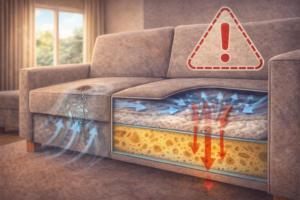
Inside a couch, cushions, padding, and support layers are physically connected. Materials touch, overlap, and compress against each other. When moisture enters one area, it becomes part of this connected system rather than remaining isolated.
This does not mean moisture rushes everywhere immediately. Movement is usually slow and uneven. Accepting that internal connections exist can make later changes feel less surprising.
Capillary Movement Inside Cushion Materials
Many cushion materials naturally draw moisture along their internal structure. This capillary movement allows moisture to spread sideways or downward, even without pressure. The process is subtle and often invisible from the outside.
Because this movement happens gradually, it is easy to underestimate. Waiting before deciding that moisture is “contained” allows time for this internal behavior to reveal itself.
Pressure Encourages Internal Spread
Pressure plays a major role in how moisture moves inside a couch. Sitting, leaning, or even the weight of the couch itself can compress damp areas. Compression pushes moisture away from the point of pressure and into neighboring zones. This shows how moisture can travel internally rather than staying confined to one spot.
This means moisture can migrate without any additional liquid being added. Recognizing that normal pressure can influence spread helps explain why dampness sometimes appears elsewhere later.
Gravity’s Quiet Influence
Gravity also shapes moisture movement. Moisture tends to move downward through cushion layers over time. A damp spot on an upper cushion can slowly affect lower padding or areas closer to the couch frame.
This downward movement is easy to miss because it does not affect the original spot visibly. Allowing time before assuming the issue is resolved can prevent overlooking gravity’s role.
Temperature Differences Create Pathways
Temperature differences inside a couch can encourage moisture movement. Warmer areas may cause moisture to become more active, while cooler areas may slow evaporation and encourage settling. These differences can exist within the same cushion.
As room conditions change, internal temperatures shift as well. Moisture may respond by relocating rather than leaving. Accepting that temperature plays a role can reduce the urge to chase isolated symptoms.
Why Moisture Often Appears Far From the Source
One of the most confusing outcomes is moisture or odor appearing in an area that was never visibly wet. This often happens because internal movement redistributed moisture over time. By the time it becomes noticeable, the original entry point may look dry.
This delay can make cause and effect feel disconnected. Slowing down and considering internal spread helps reconnect those dots.
Surface Dryness Can Be Misleading
A couch can feel dry on the surface while moisture continues moving inside. Surface fabric responds quickly to air exposure, while deeper layers respond slowly. Moisture inside couch cushions can remain even when the surface feels completely dry. This mismatch can create a false sense of completion.
It is reasonable to trust touch, but it is also reasonable to doubt it when moisture is involved. Waiting longer than surface cues suggest often avoids later surprises.
Why Repeated Interventions Can Increase Spread
When moisture is noticed, repeated adjustments—pressing, blotting, repositioning cushions—can unintentionally encourage internal movement. Each action changes pressure and contact between materials.
Sometimes doing less limits how far moisture travels. Pausing before intervening again can prevent expanding the affected area.
Accepting Slow, Internal Processes
Internal moisture movement is rarely fast or dramatic. It unfolds quietly over time. This makes it easy to overlook until secondary effects appear. Accepting that these processes are slow can reduce frustration.
Rather than trying to control every variable, allowing time for internal equilibrium to return often leads to better outcomes.
When Internal Spread Matters Most
Internal spread is more noticeable after deep cleaning, significant spills, or in environments where drying is slow. In these cases, moisture has more opportunity to move before leaving the couch.
Recognizing higher-risk situations can help set more cautious expectations. Extra patience during these times often prevents compounding issues.
Why Containment Is Harder Than It Seems
Trying to isolate moisture inside a couch is difficult because the structure is designed to distribute forces, not contain fluids. Expecting moisture to behave differently than the materials allow can lead to repeated disappointment.
Accepting the couch’s design limitations can reduce the urge to fight its natural behavior.
FAQ
Can moisture really spread without more liquid being added?
Yes. Internal movement, pressure, and gravity can redistribute existing moisture over time.
Why does the original wet spot look fine later?
Surface drying happens faster than internal drying. Moisture may have moved elsewhere before fully leaving.
Does this mean every spill affects the whole couch?
Not always, but internal spread is common enough to consider, especially with thicker cushions.
Is waiting better than repeated adjustments?
Often, yes. Allowing moisture to settle and leave naturally can limit how far it spreads.