
Small temperature changes inside a refrigerator are often dismissed as normal variation. Doors open, groceries are added, and cycles adjust. When fluctuations become frequent or unpredictable, though, they can signal more than routine adjustment. In some cases, inconsistent temperatures point to structural failure developing inside the appliance rather than a simple setting or usage issue.
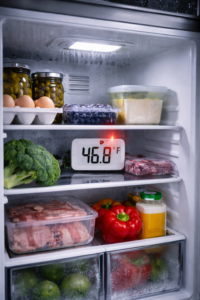
Why Temperature Changes Are Easy to Explain Away
Refrigerators are expected to fluctuate slightly. Because cooling is cyclical, minor rises and drops can feel harmless. This makes it easy to rationalize broader swings as normal behavior, especially when food still seems cold most of the time. Relying on visible results alone can hide deeper reliability problems.
That assumption can delay closer attention. Structural problems rarely announce themselves clearly at first. Slowing down instead of immediately explaining away changes can help distinguish between normal variation and developing instability.
What Counts as a Meaningful Fluctuation
Not every temperature change matters. The concern grows when fluctuations feel inconsistent or unrelated to obvious causes. When cooling seems reliable one day and unpredictable the next, it suggests internal systems may not be working together as designed. This pattern mirrors how internal wear is often mistaken for simple upkeep issues.
Structural failure does not mean the refrigerator is falling apart physically. It refers to internal components losing alignment, integrity, or coordination. These changes can affect how cold air is distributed and maintained, even if the appliance continues running.
How Structural Failure Affects Temperature Control
A refrigerator relies on precise internal pathways to regulate temperature evenly. When those pathways degrade, air may not circulate as intended. Some areas may cool too much while others warm unexpectedly.
These problems often develop gradually. Because the refrigerator still turns on and cools intermittently, it can appear functional. Pausing to observe patterns rather than focusing on isolated moments can reveal whether temperature behavior is becoming less predictable over time.
Why Adjustments Don’t Always Help
A common response to temperature issues is adjusting settings. When the issue is structural, changes may produce temporary improvement without resolving the underlying cause. This can create a cycle of reassurance followed by renewed fluctuation.
Repeated adjustments can also mask the real problem by constantly changing conditions. If stability never truly returns, it may be worth stopping adjustments and simply observing what the refrigerator does on its own.
The Risk of Treating Structural Issues as Minor
When structural failure is treated as a minor temperature quirk, continued use becomes the default. Over time, this can increase strain on already compromised components. Gradual damage often progresses quietly before becoming obvious.
While immediate harm is not guaranteed, uncertainty grows as predictability declines.
Food safety concerns can also become harder to assess. Inconsistent temperatures make it difficult to know whether storage conditions are reliable. Choosing restraint when trust in consistency erodes can reduce exposure to unclear risk.
Why “It Cools Eventually” Is Not Reassuring
A refrigerator that eventually reaches cold temperatures can still be unstable. Delayed or uneven cooling often points to systems compensating for internal issues. This compensation can hide deterioration rather than correct it.
Relying on eventual cooling can postpone recognition that something fundamental has changed. When normal behavior requires constant patience, slowing down rather than adapting expectations can be the safer response.
Structural Failure and Predictability
Predictability is a key measure of appliance health. Structural problems tend to reduce consistency before causing complete failure. If temperature behavior feels different from one cycle to the next, that pattern matters more than any single reading. Intermittent behavior often signals deeper instability rather than isolated disruption.
Accepting unpredictability as normal can shrink safety margins quietly. Noticing and respecting inconsistency can preserve options that disappear once failure becomes obvious.
When Fluctuations Signal a Bigger Shift
Temperature fluctuations begin to signal structural failure when they persist, resist explanation, or expand in scope. What starts as occasional variation can become a defining feature of operation.
Recognizing this shift does not require immediate action. It requires reframing the issue from “minor adjustment needed” to “system reliability may be changing.” That reframing alone can guide more cautious decisions.
FAQ
Are all refrigerator temperature fluctuations a problem?
No. Minor, explainable changes are normal. Patterns that feel inconsistent or unpredictable deserve more attention.
Does structural failure mean the refrigerator will stop working soon?
Not necessarily. Structural issues often reduce reliability before causing full failure. Pausing when uncertainty grows can limit risk.
Why do temperature issues come and go?
Internal components may compensate under certain conditions. This can create temporary improvement without true resolution.
Is it reasonable to keep using a refrigerator with inconsistent temperatures?
It can be, but it is also reasonable to slow down and observe when consistency cannot be trusted. Doing less can preserve clarity while understanding develops.