
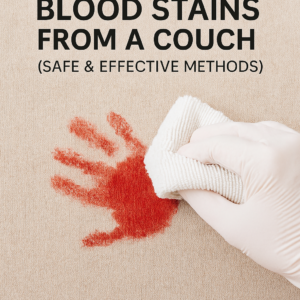
Blood stains on a couch can be stressful, especially when they happen unexpectedly from a small cut, nosebleed, or accident. Blood sets quickly into fabric fibers, and using the wrong method can make the stain permanent.
Knowing how to remove blood stains from a couch safely allows you to act fast without damaging the upholstery. The key is using cold-based techniques, gentle blotting, and avoiding common cleaning mistakes.
In this guide, you’ll learn safe, practical methods to remove blood stains from a couch at home while protecting the fabric.
If the stain has an oily residue after cleaning, you may find this guide on removing grease stains from a couch helpful for preventing dark marks.
🧵Why Blood Stains Are Difficult to Remove from Upholstery
Blood contains proteins that bind tightly to fabric fibers as they dry. Heat causes these proteins to set, which is why hot water or steam often makes blood stains worse.
This reaction is well documented in fabric care science, as heat causes blood proteins to bind permanently to textile fibers.
Different couch materials absorb blood at different rates, but all fabrics require careful handling to avoid spreading the stain or leaving dark rings behind.
🧰What You’ll Need Before You Start
Prepare these items before treating the stain:
-
Clean white cloths or paper towels
-
Cold distilled water
-
Mild liquid dish soap
-
Hydrogen peroxide (3%, for light fabrics only)
-
Cotton swabs
-
Vacuum cleaner with upholstery attachment
Always test any solution on a hidden area of the couch first.
🌀Step-by-Step: How to Remove Blood Stains from a Couch
Step 1 – Blot Fresh Blood Immediately
If the stain is fresh, gently blot it with a clean cloth to absorb as much blood as possible.
Do not rub, as this pushes blood deeper into the fibers.
Step 2 – Use Cold Water Only
Lightly dampen a cloth with cold water and gently blot the stain from the outside inward.
Never use warm or hot water on blood stains.
Step 3 – Apply Mild Soap if Needed
Mix a small amount of dish soap with cold water. Dab the solution onto the stain using a clean cloth.
Blot gently and rinse lightly with cold water.
Step 4 – Treat Stubborn Stains Carefully
For light-colored fabrics only, a small amount of hydrogen peroxide can help lift remaining blood.
Apply with a cotton swab and blot gently as it bubbles. Stop immediately if discoloration appears.
Step 5 – Let the Couch Air Dry
Allow the area to dry naturally at room temperature.
Once dry, lightly vacuum or brush the fabric to restore texture.
It’s important to remember that blood stains may not disappear completely after the first attempt. Letting the fabric dry fully between cleaning attempts helps prevent moisture buildup and reduces the risk of spreading the stain. Gentle repetition is far more effective than aggressive scrubbing when treating blood stains on upholstery.
⚠️Common Mistakes to Avoid
-
Using hot water or steam
-
Scrubbing aggressively
-
Over-saturating the fabric
-
Skipping a spot test
-
Applying peroxide on dark upholstery
These mistakes often make blood stains permanent.
🛑When You Should Avoid DIY Blood Removal
Avoid home cleaning if:
-
The couch is made of suede, velvet, or leather
-
The blood stain is old and deeply set
-
The manufacturer’s label warns against water or chemicals
In these cases, professional upholstery cleaning is the safest option.
✅Conclusion
Blood stains on a couch can be intimidating, but they don’t have to be permanent. With quick action, cold-based cleaning methods, and gentle blotting, many blood stains can be removed safely at home without damaging the fabric.
If the blood stain does not fully disappear after the first attempt, allow the area to dry completely before repeating the process. Reapplying cold-water methods gently is safer than scrubbing or rushing the cleaning. Patience is often the key to removing blood stains from a couch without causing fabric damage or discoloration.