
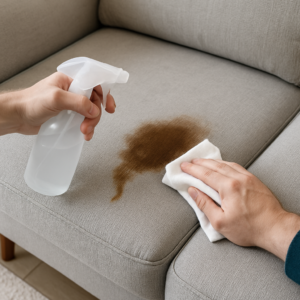
Coffee stains on a couch are one of the most common and frustrating household problems. A small spill can quickly soak into the fabric, leaving behind a dark mark or unpleasant odor if not treated correctly.
Knowing how to remove coffee stains from a couch properly can make a big difference. With the right approach, many coffee stains can be reduced or removed at home without damaging the upholstery or spreading the stain further.
In this guide, you’ll learn safe, practical methods to treat coffee stains on a couch using gentle techniques that protect the fabric.
Why Coffee Stains Are Hard to Remove from Couches
Coffee contains natural pigments, oils, and sometimes milk or sugar, all of which can bond to upholstery fibers. When coffee dries, these components can leave behind visible discoloration and residue.
Couch fabrics absorb liquid quickly, especially if the spill isn’t blotted immediately. Heat, rubbing, or using the wrong cleaner can cause the stain to set deeper into the fibers, making it harder to remove later.
Coffee stains behave similarly to other oily marks, especially when milk or sugar is involved, and require a careful approach similar to removing grease stains from a couch
What You’ll Need to Remove Coffee Stains Safely
Before starting, gather these basic supplies:
-
Clean white cloths or paper towels
-
Distilled water
-
Mild liquid dish soap
-
Baking soda (optional)
-
Soft upholstery brush or clean toothbrush
-
Vacuum cleaner with upholstery attachment
Avoid bleach, ammonia, or harsh chemicals, as they can damage upholstery fibers or cause discoloration.
Step-by-Step: How to Remove Coffee Stains from a Couch
Step 1 – Blot the Spill Immediately
If the coffee stain is fresh, act as quickly as possible.
Gently blot the area with a clean cloth or paper towel to absorb as much liquid as possible. Do not rub, as this can push the coffee deeper into the fabric.
Continue blotting until no more liquid transfers to the cloth.
These steps work best on standard upholstery and follow the same gentle principles used when cleaning a fabric sofa at home.
Step 2 – Prepare a Mild Cleaning Solution
Mix a small amount of mild dish soap with distilled water. The solution should be lightly soapy, not foamy or concentrated.
Dampen a clean cloth with the solution. The cloth should be moist, not dripping wet.
Step 3 – Gently Blot the Coffee Stain
Using the damp cloth, gently blot the stained area from the outside toward the center. This helps prevent the stain from spreading.
Apply light pressure and work slowly. Avoid scrubbing, which can damage fibers and worsen the stain.
Step 4 – Rinse with Minimal Moisture
Lightly dampen another clean cloth with plain distilled water and blot the area again. This helps remove soap residue that could attract dirt later.
Do not oversaturate the fabric.
Step 5 – Absorb Moisture and Let It Dry
Use a dry cloth to blot excess moisture. Allow the couch to air dry naturally at room temperature.
If possible, improve airflow in the room, but avoid direct heat sources such as hair dryers or heaters.
Using Baking Soda for Odor or Light Residue
If the coffee stain left a lingering odor after drying:
-
Lightly sprinkle baking soda over the dry area
-
Let it sit for several hours or overnight
-
Vacuum gently using an upholstery attachment
Baking soda can help absorb odors and minor residue, but it may not remove deep discoloration on its own.
Common Mistakes to Avoid
When dealing with coffee stains, avoid these common errors:
According to stain-removal guidelines published by Good Housekeeping, using hot water or harsh scrubbing can permanently set beverage stains into upholstery fibers.
-
Rubbing or scrubbing aggressively
-
Using hot water, which can set the stain
-
Applying too much cleaning solution
-
Skipping the rinsing step
-
Using colored cloths that may bleed dye
Gentle, controlled cleaning usually produces better results.
When Coffee Stains Won’t Come Out
Some coffee stains may be difficult to remove at home, especially if:
-
The stain is old or has been reheated during previous cleaning
-
The couch fabric is delicate or untreated
-
Milk or sugar was added to the coffee
Repeated DIY attempts can sometimes cause fading or uneven texture.
When to Call a Professional Cleaner
Professional upholstery cleaning may be the safer option if:
-
The stain covers a large or visible area
-
The couch is made from specialty fabric
-
The stain keeps returning after drying
Professionals have equipment that controls moisture and extracts residue more effectively.
Conclusion
Coffee stains on a couch don’t always mean permanent damage. With quick action, gentle blotting, and mild cleaning solutions, many stains can be reduced or removed safely at home. The key is patience, minimal moisture, and avoiding harsh techniques.
If home methods don’t work, stopping early and consulting a professional can help protect your couch and prevent further damage.