
Mud looks simple because it feels familiar, but treating it too quickly often causes more damage than the mud itself. Wet soil spreads easily, grinds into fabric, and leaves stains that were not there at first. Waiting feels wrong, yet rushing usually turns a small mark into a lasting problem.
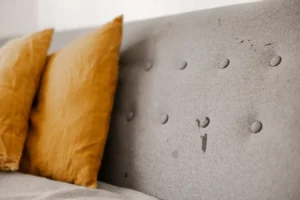
What to Do Immediately
The most important step is restraint. Wet mud should not be wiped, rubbed, or blotted, even lightly. Touching it spreads soil particles and pushes them deeper into the fabric structure. It is often safer to pause entirely and let the situation stabilize rather than trying to “do something” right away. If the area feels urgent, stopping is still better than acting without a plan.
A Careful Cleaning Approach
Any attempt to address mud should begin only after it is completely dry. Dry material sits on the surface, while wet soil embeds itself. Even then, not all fabrics release dried dirt easily, and some discoloration may already be permanent. Moisture should be approached with extreme caution, as adding water can reactivate soil and expand the mark. If the fabric reacts poorly or the area darkens, stopping early prevents wider damage.
Common Mistakes That Feel Logical
Cleaning while the mud is still wet feels efficient but usually spreads the stain. Adding water or soap seems harmless, yet often creates residue or locks discoloration into the fibers. Scrubbing feels decisive but damages texture and enlarges the affected area. This happens because friction alters the surface of upholstery fibers, which is why scrubbing often causes permanent texture changes rather than real cleaning. Treating multiple spots at once increases the chance of spreading soil rather than removing it.
When This Approach Is Not Enough
Some mud contains clay or minerals that stain fabric regardless of how gently it is treated. In other cases, the soil has already bonded with the fibers before any action was taken. If a faint mark remains after careful, minimal effort, further attempts often create more visible harm than improvement. In many cases, repeated cleaning attempts are what make stains more noticeable, not the original dirt itself. Accepting a small imperfection is sometimes the safest outcome.
FAQ
Why does mud sometimes leave a stain even after it dries?
Certain soils contain fine particles or minerals that discolor fabric once they settle. Drying alone does not always prevent staining.
Is it better to clean mud right away or wait?
Waiting until the mud is dry is usually safer. Acting too early often causes deeper embedding and wider marks.
What if the mark is only visible in certain light?
That usually means particles are embedded in the fabric texture. These are difficult to remove without altering the fabric itself.
Can repeated attempts eventually remove the mark?
Repeated cleaning often increases damage rather than improving results. If gentle methods do not work early, stopping is usually the wiser choice.