
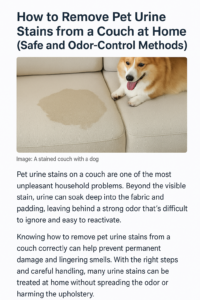
Pet urine stains on a couch are one of the most unpleasant household problems. Beyond the visible stain, urine can soak deep into the fabric and padding, leaving behind a strong odor that’s difficult to ignore and easy to reactivate.
Knowing how to remove pet urine stains from a couch correctly can help prevent permanent damage and lingering smells. With the right steps and careful handling, many urine stains can be treated at home without spreading the odor or harming the upholstery.
This guide explains safe, practical methods to remove pet urine stains from a couch while minimizing moisture and avoiding common mistakes.
Why Pet Urine Stains Are So Hard to Remove
Pet urine contains uric acid crystals that bond tightly to fabric fibers and cushioning. Even when the surface looks clean, residue can remain deep inside the couch, causing odors to return over time.
Heat, excessive water, or harsh cleaners can worsen the problem by spreading the urine deeper or setting the odor permanently. That’s why controlled cleaning and odor-neutralizing steps are essential.
Because urine odor can linger even after surface cleaning, the same principles used for removing bad smell from a sofa often apply to pet-related stains as well.
What You’ll Need to Remove Pet Urine Stains Safely
Before starting, gather the following items:
-
Clean white cloths or paper towels
-
Distilled water
-
Mild liquid dish soap
-
Baking soda
-
Spray bottle
-
Vacuum cleaner with upholstery attachment
Avoid ammonia-based cleaners, as their smell can encourage pets to mark the area again.
Step-by-Step: How to Remove Pet Urine Stains from a Couch
Step 1 – Blot the Area Immediately
If the urine stain is fresh, act as quickly as possible.
Use clean paper towels or a cloth to blot the area gently. Apply pressure to absorb as much liquid as possible. Avoid rubbing, which can spread the urine deeper into the fabric.
Step 2 – Apply a Mild Cleaning Solution
Mix a small amount of mild dish soap with distilled water. Lightly dampen a clean cloth with the solution.
Gently blot the stained area from the outside toward the center. Work slowly and avoid oversaturating the couch.
Step 3 – Rinse with Minimal Moisture
Dampen a separate cloth with distilled water and blot the area again to remove soap residue.
This step helps prevent sticky residue that can trap odors later.
Step 4 – Neutralize Odor with Baking Soda
Once the area is mostly dry:
-
Sprinkle baking soda generously over the affected area
-
Let it sit for several hours or overnight
-
Vacuum thoroughly using an upholstery attachment
Baking soda helps absorb lingering odors but works best after proper cleaning.
Step 5 – Let the Couch Air Dry Completely
Allow the couch to dry naturally at room temperature. Improve airflow if possible, but avoid heat sources such as hair dryers or heaters.
Odors may seem stronger while drying but often fade once the fabric is fully dry.
Common Mistakes to Avoid
When dealing with pet urine stains, avoid these mistakes:
-
Using ammonia or bleach
Similar mistakes also occur when removing blood stains from a couch, where heat and aggressive scrubbing can permanently set stains and odors.
-
Soaking the couch with water
-
Scrubbing aggressively
-
Using heat to speed up drying
-
Skipping the odor-neutralizing step
These mistakes often cause odors to return or spread.
When Pet Urine Odors Keep Coming Back
If urine smells return after cleaning, it may mean:
-
The urine reached the couch padding
-
The stain is old and deeply set
-
Moisture reactivated uric acid residue
Repeated surface cleaning may not fully solve the problem in these cases.
According to guidance from the Humane Society of the United States, urine odors often persist because uric acid crystals remain in fabrics even after visible stains are removed.
When to Call a Professional Cleaner
Professional upholstery cleaning may be necessary if:
-
The urine stain covers a large area
-
Odors persist despite repeated cleaning
-
The couch is made from delicate or expensive fabric
Professionals can use controlled extraction methods designed to break down odor-causing residue safely.
Conclusion
Pet urine stains on a couch are challenging but not always permanent. With quick blotting, gentle cleaning, and proper odor control, many stains can be treated safely at home.
The key is avoiding harsh chemicals, limiting moisture, and allowing thorough drying. If odors persist, professional cleaning can help protect your couch and restore comfort to your living space.