
Introduction
Restoring a floor often sounds like the responsible choice. Repairing, refinishing, or deep cleaning feels preferable to removing something that is already installed. The problem is that restoration efforts can cross a point where they introduce more harm than value, especially when the floor is already compromised. This is similar to cases where floors sometimes feel clean but start deteriorating afterward, even though the initial results seem positive.
This turning point is easy to miss. Floors can look close to recoverable even when their structure or surface layers are no longer tolerant of further work. Slowing down before attempting restoration can prevent damage that replacement would have avoided.
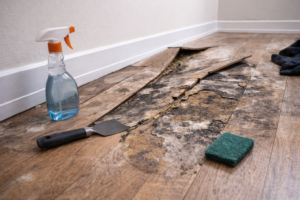
Warning Signs to Pause or Stop
One warning sign is when restoration attempts no longer produce lasting improvement. The floor may look better briefly, only to show the same issues again shortly afterward. When results fail to hold, it is often a signal that the floor’s limits are being reached.
Another sign is uneven response. Some areas may accept restoration while others worsen, discolor, or change texture. This inconsistency suggests that the floor is no longer behaving as a single system. At that stage, continuing can create patchwork damage that is harder to live with than the original condition.
Repeated uncertainty is also a warning. If each step raises new questions about what the floor can handle next, hesitation is appropriate. Pausing at this point can prevent a series of small decisions from adding up to irreversible harm.
Why Restoration Efforts Can Backfire
Restoration usually involves added stress. Moisture, abrasion, chemicals, or heat are introduced to reverse wear or damage. When a floor is already weakened, these forces can accelerate breakdown rather than correct it.
Layered floors are especially sensitive. Surface treatments may be stripped faster than intended, adhesives can loosen, and underlying materials may absorb stress unevenly. Once these layers are altered, they cannot always be restored to their original balance.
There is also the issue of cumulative impact. Each attempt to restore changes the floor slightly. What seems gentle in isolation can become damaging when repeated. When restoration turns into a cycle, stopping can limit how far the damage spreads.
When Replacement Becomes the Safer Option
Replacement is often viewed as a last resort, but it can be the safer option when restoration risks are high. A floor that has reached its tolerance limit may not respond predictably to further work. In that case, replacement prevents ongoing deterioration.
Another factor is control. Replacement resets variables, while restoration builds on existing uncertainty. When the floor’s history is complex or poorly documented, adding more intervention increases risk. Choosing not to restore can avoid compounding unknowns.
It can also help to pause and compare outcomes rather than costs alone. A restored floor that fails again may require replacement anyway, after additional damage has occurred. This mirrors situations where replacing carpet is cheaper than trying to save it after repeated restoration attempts. Waiting before attempting restoration can keep replacement simpler if it becomes necessary.
Safer Alternatives to Consider
Observation can be a valid alternative. Allowing time to pass without intervention can reveal whether the floor is stable or still changing. This waiting period may feel unproductive, but it avoids introducing new stress while information becomes clearer.
Limiting action is another option. Basic, low-impact care that does not alter the floor’s structure can slow decline without attempting reversal. Even then, stopping early is often safer than pushing for improvement.
Gathering information before acting can also change the decision. Understanding the floor’s construction, age, and past treatments may clarify whether restoration is realistic. Taking time to learn reduces the pressure to act immediately.
Why Doing Nothing Can Sometimes Be the Smartest Choice
Once restoration begins to cause additional damage, continuing often worsens the outcome. Floors rarely recover from over-restoration, and attempts to correct new problems can multiply them. Accepting imperfection can protect the floor from further loss.
Doing nothing preserves the current state. It keeps the floor from being altered again while decisions are considered. This pause can make later choices clearer, whether that leads to careful replacement or limited maintenance.
Choosing not to restore is not neglect. It can be a deliberate decision to stop before crossing a point of no return. In many cases, restraint prevents a manageable situation from becoming a permanent one.
FAQ
How can restoration damage a floor more than replacement would?
Restoration can introduce stress that weak floors cannot tolerate, leading to additional damage before replacement happens anyway.
Is it always wrong to try restoring a floor first?
Not always, but when warning signs appear, pausing can prevent unnecessary harm.
What if the floor looks close to being fixed?
Appearance can be misleading. If improvements do not last, stopping may be safer than continuing.
Does doing nothing mean the floor will get worse on its own?
Not necessarily. Many floors remain stable when left alone, while repeated restoration attempts are what accelerate decline.