
After a couch has been cleaned, odors are often expected to fade and stay gone. When smells return weeks later, the cleaning itself is usually blamed. However, seasonal changes inside a home can quietly alter how odors behave long after cleaning is finished. Temperature shifts, humidity changes, and different indoor habits across seasons all influence whether smells stay hidden or resurface. Slowing down to consider seasonal effects can help explain why odor issues feel unpredictable.
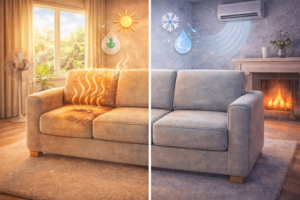
Why Odors Seem Resolved After Cleaning
Cleaning creates a clear sense of completion. Fabrics look fresher, the couch feels lighter, and any noticeable smell may disappear. This creates the impression that the problem has been fully addressed. Once that impression sets in, later changes can feel surprising or frustrating.
It can help to pause before assuming the outcome is permanent. Cleaning addresses surface conditions, but seasonal shifts affect the environment the couch lives in every day afterward.
Seasonal Humidity Changes and Odor Release
Humidity often changes significantly with the seasons. Humidity levels directly affect how couch fabric and padding release and retain odors. In warmer months, higher humidity can make materials absorb and hold moisture more easily. In cooler months, indoor heating can dry the air unevenly. These shifts affect how residual moisture and odor-causing compounds behave inside cushions and fabric.
Odors may stay dormant under one set of conditions and become noticeable under another. Recognizing that humidity does not stay constant year-round can explain why smells appear to “come back” without any new spill or use.
Temperature Swings Wake Up Hidden Smells
Temperature influences how materials release trapped odors. Heating and cooling cycles can change when and how odors become noticeable. Warmer conditions can make smells more volatile, allowing them to escape into the air more easily. Cooler conditions can slow this process, making odors less noticeable for a time.
As seasons change, these temperature effects cycle naturally. A couch that smelled fine in winter may smell different in summer, even though nothing new happened. Waiting before reacting can prevent unnecessary re-cleaning.
Heating and Cooling Patterns Change Airflow
Seasonal shifts also change how air moves through a home. Airflow patterns influence whether odors stay trapped or begin circulating again. Heating systems, air conditioning, and open or closed windows all alter airflow patterns. These changes can direct air toward or away from parts of the couch.
When airflow shifts, odors that were trapped may begin to circulate again. Because these changes are gradual, they are easy to overlook. Slowing down and noticing seasonal airflow habits can clarify why odor behavior changes.
Cushion Materials Respond Differently Across Seasons
Cushion materials do not respond uniformly to environmental changes. Some materials expand slightly with warmth and contract in cooler conditions. Others absorb and release moisture at different rates depending on the season.
These material responses can expose odors that were previously sealed in. Because the couch itself has not changed, it can be tempting to blame cleaning quality instead of environmental timing.
Why Odors Often Return Months Later
Odors linked to seasonal changes often return after a delay. A couch cleaned in spring may smell fine until late summer or fall, when humidity or heating patterns shift. This delay makes the connection harder to see.
Allowing time before assuming something went wrong can help reveal whether the issue is seasonal rather than procedural. Patience often provides more clarity than immediate action.
Seasonal Habits Add Subtle Effects
Different seasons come with different household habits. Closed windows, heavier fabrics, pets spending more time indoors, or changes in ventilation all affect how odors move and linger. These habit changes layer on top of environmental shifts.
Because these changes feel normal, their impact on couch odors is easy to miss. Taking a broader view of seasonal routines can explain odor changes without pointing to a single cause.
Why Re-Cleaning Is Not Always the Answer
When odors return, re-cleaning often feels like the obvious solution. However, if the underlying cause is seasonal, cleaning again may only offer temporary relief. The same conditions can trigger the smell again later.
It can be wiser to pause and observe whether odors fluctuate with seasonal changes. Doing less can prevent a cycle of repeated cleaning without lasting results.
Accepting Seasonal Influence as Normal
Seasonal odor changes do not necessarily mean a couch is damaged or dirty. They often reflect how materials interact with changing environments. Accepting this can reduce frustration and prevent overreaction.
Understanding that odor behavior is dynamic, not fixed, allows for more measured responses. Sometimes the safest choice is simply allowing the season to pass.
FAQ
Why does my couch smell fine after cleaning but not later?
Seasonal changes in humidity, temperature, and airflow can release odors that were previously inactive.
Does this mean the cleaning failed?
Not necessarily. Cleaning and seasonal conditions affect odors differently and at different times.
Can odors disappear again without cleaning?
Yes. As conditions change, odors may fade on their own. Waiting can avoid unnecessary action.
Is it normal for couch odors to change with the seasons?
Yes. Seasonal influence on materials and indoor climate makes this a common experience.