
After a couch has been cleaned or exposed to moisture, it can look dry on the surface long before it is actually dry inside. This gap between appearance and reality is where many long-term problems begin. It often feels reasonable to sit “just for a moment,” but that small decision can change how moisture behaves inside the couch. Slowing down at this stage is often less risky than trying to fix problems later.
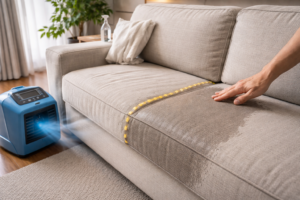
Why a Couch Can Feel Dry Before It Really Is
Couch fabrics are designed to release surface moisture faster than the layers beneath them. Air movement and room temperature can make the outer fabric feel dry to the touch while internal padding still holds dampness. This creates a false sense of readiness. This is because moisture can continue moving inside a couch even after the surface no longer feels wet. It can help to pause and assume the couch is still vulnerable, even if it no longer feels wet.
Moisture trapped below the surface does not disappear evenly. Instead, it migrates slowly, sometimes moving deeper rather than evaporating. Waiting a bit longer than feels necessary can reduce the chance of that moisture being pushed into places where it is harder to escape.
What Sitting Too Soon Changes Inside the Couch
When weight is added to a not-yet-dry couch, internal layers compress. This pressure can force moisture sideways or downward into foam, batting, or structural areas. Once moisture is driven inward, normal drying becomes less effective. It is often safer to let the couch rest undisturbed rather than testing it with brief use.
Even light use can interrupt drying patterns. Over time, repeated pressure during early use can subtly change how the fabric responds. The couch may still dry eventually, but not in the way it would have if left alone. Accepting a temporary inconvenience can prevent longer-term discomfort or damage.
How Moisture and Pressure Interact Over Time
Moisture inside a couch does not stay in one place. Pressure from sitting can cause it to spread unevenly, leading to areas that remain damp longer than others. These uneven pockets are easy to miss and may only become noticeable later through odor or texture changes. This is one reason couch cushions tend to hold odors longer than the outer fabric layers. At that point, the cause is harder to trace.
It can be tempting to “check progress” by sitting briefly, but doing less often preserves the conditions needed for even drying. Letting the couch finish drying on its own timeline is usually the calmer option.
Fabric and Cushion Differences That Matter
Different couch materials respond differently to early use. Some fabrics rebound quickly, while others hold moisture close to the surface. Cushion construction also matters, as thicker or denser padding tends to release moisture more slowly. Because these differences are not always visible, caution is often the safest assumption.
If there is uncertainty about how the couch is built, waiting becomes a reasonable default. There is rarely a downside to giving the couch more time, while sitting too soon can create effects that are not immediately visible.
When Waiting Is the Safer Choice
If the couch was heavily damp, exposed to humidity, or cleaned more than lightly, waiting is usually the lower-risk path. Odors, stiffness, or subtle shape changes often trace back to early use during drying. Choosing not to sit, even when it seems fine, can prevent those outcomes.
It is also acceptable to decide that the couch will stay unused longer than expected. That pause can feel inconvenient, but it often avoids the need for further intervention later.
FAQ
Can sitting briefly really make a difference?
Even short periods of use can change how moisture moves inside the couch. When in doubt, avoiding use altogether is usually safer.
What if the couch only feels slightly damp?
Slight dampness can still mean deeper moisture. Treating “almost dry” as still wet can reduce risk.
Is surface dryness a reliable sign?
Surface dryness alone does not show what is happening inside the cushions. It helps to assume there is more moisture than can be felt.
Is it ever okay to use the couch early?
In some situations it may not cause obvious issues, but there is no clear way to predict that outcome. Waiting removes that uncertainty.