
Stove problems that look cosmetic are often treated as harmless imperfections. A cracked knob, uneven burner color, loose panel, or chipped surface can feel like an appearance issue rather than a functional one. As long as the stove still turns on and produces heat, these changes are easy to ignore. In some cases, however, what looks cosmetic is actually an early sign of conditions that can become dangerous if dismissed.
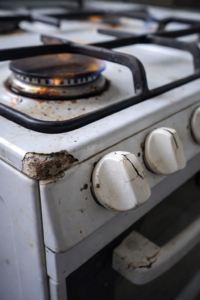
Why Cosmetic Issues Feel Safe to Ignore
Cosmetic problems do not usually interfere with cooking right away. The stove lights, heats, and appears to function normally. Because the issue does not stop use, it is often categorized as visual or superficial rather than operational.
This framing creates false reassurance. Many safety-related changes begin at the surface, where damage or misalignment becomes visible before performance fails. Slowing down to question whether a cosmetic change is purely visual can prevent overlooking deeper risk.
The Connection Between Appearance and Function
On a stove, external parts are often closely tied to internal systems. Knobs, panels, and burner components are not just decorative; they help regulate heat, airflow, and control. When these elements shift, crack, or loosen, the internal balance can change as well. Internal wear often shows itself through external changes before failure occurs.
A cosmetic change may reflect stress, heat exposure, or wear affecting the stove more broadly. Because the stove still works, this connection is easy to miss. Pausing to consider why the change occurred can be more informative than assuming it does not matter.
How Small Changes Can Affect Heat Control
Heat control depends on alignment and consistency. Uneven heat behavior is often one of the first signs that control is no longer reliable.
When parts that appear cosmetic are damaged or misaligned, heat may behave less predictably. Flames can burn unevenly, surfaces can heat differently, or controls may respond less precisely.
These changes do not always cause immediate failure. Instead, they introduce uncertainty. When heat becomes harder to predict, safety margins quietly shrink. Choosing restraint when control feels less reliable can reduce exposure to unclear conditions.
Why “It’s Just a Crack” Can Be Misleading
Cracks, discoloration, or looseness often get labeled as normal wear. While some wear is expected, visible damage can also indicate that materials are no longer handling heat or stress as intended.
What looks minor on the outside can reflect repeated thermal stress underneath. Because the stove may still operate, the damage is often normalized. Slowing down instead of minimizing visible changes can help prevent that normalization.
Cosmetic Issues and Progressive Deterioration
Cosmetic problems rarely stay static. Heat and use tend to worsen existing damage over time. A small crack can expand, a loose part can shift further, or a warped surface can distort heat distribution more noticeably.
This progression is gradual, which makes it easy to adapt rather than reassess. Many appliance risks escalate quietly before becoming clearly critical.
When changes continue, even subtly, they often signal that deterioration is ongoing. Doing less instead of pushing through can interrupt that progression.
Why Continued Use Increases Risk
Each cooking cycle exposes damaged areas to more heat and stress. When a stove already shows visible changes, continued use can accelerate wear in ways that are not immediately visible.
There is also added unpredictability. Controls may not respond the same way every time, or heat may behave inconsistently. This does not mean danger is guaranteed, but it does mean conditions are less stable. Reducing use until behavior feels clearer can limit risk accumulation.
When Cosmetic Problems Are No Longer Cosmetic
Cosmetic issues cross into concern when they affect control, consistency, or confidence. If a stove feels different to operate, behaves unpredictably, or shows visible changes that continue to evolve, the issue is no longer just about appearance.
Recognizing this shift does not require immediate action. It requires reframing the problem as a potential safety issue rather than a visual annoyance. That reframing alone can change how cautiously the stove is used.
Why Hesitation Is a Reasonable Response
Stoves involve open heat, which raises the stakes of uncertainty. Hesitating when something looks off is not overreacting. It is acknowledging that cosmetic changes can reflect deeper instability.
Slowing down allows time to observe whether the issue stabilizes or continues to change. It also reduces exposure while understanding develops. In situations involving heat, restraint is often the safer default.
FAQ
Are all cosmetic stove problems dangerous?
No. Some are purely visual. Concern grows when cosmetic changes affect heat behavior or continue to worsen.
Why do cosmetic issues sometimes signal deeper problems?
Because surface components are exposed to heat and stress first, making them early indicators of internal change.
Is it safe to keep using a stove with cosmetic damage?
It can be, but uncertainty increases when damage affects control or predictability. Slowing down can reduce risk.
How should cosmetic changes be approached calmly?
By observing patterns, avoiding assumptions, and allowing pauses rather than continuing normal use without question.