
Floor damage can be unsettling, especially when it’s unclear how serious it is. A mark, crack, or uneven area may look minor at first, but not all damage stays on the surface. Some problems affect only the finish, while others involve the floor’s structure beneath. Understanding the difference helps prevent unnecessary panic—and just as importantly, prevents ignoring issues that need attention.
This is closely related to why hardwood floors can look fine after cleaning and then fail months later.
Why the Difference Matters
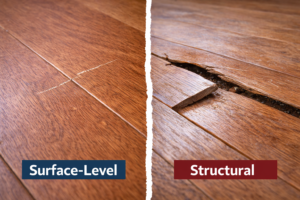
Surface-level damage usually affects appearance more than function. Structural damage, on the other hand, can compromise stability, longevity, and safety. Treating these two types as the same often leads to poor decisions: overreacting to cosmetic flaws or underestimating deeper problems.
Taking time to assess before acting is often the safest move. Rushing to fix or cover damage without understanding it can make outcomes worse.
What Counts as Surface-Level Damage
Surface-level damage typically involves the outermost layer of the floor.
This often connects to when repeated floor cleaning breaks down protective finishes over time. This might be the finish, coating, or top veneer, depending on the floor type. Common examples include light scratches, dull patches, minor scuffs, or shallow stains.
These issues usually don’t change how the floor feels underfoot. The boards remain stable, seams don’t shift, and there’s no new movement or sound. Even when surface damage looks noticeable, it often progresses slowly or not at all. Pausing to observe whether the damage changes over time can provide useful clues.
Signs Damage May Be Structural
Structural damage affects what’s underneath the visible surface. This can include the wood itself, subfloor layers, or how boards connect to each other. Signs often involve changes in behavior rather than appearance alone.
Floors that feel soft, spongy, or uneven may indicate deeper problems. These are similar warning signs discussed when steam mop use on hardwood floors causes delayed damage. Boards that lift, sink, or separate noticeably can suggest moisture intrusion or subfloor issues. New creaking, shifting, or movement under weight is another signal that damage may extend beyond the surface. When these signs appear, slowing down and avoiding added stress to the floor is usually wise.
How Time Reveals the Truth
One of the most reliable ways to distinguish surface from structural damage is time. Surface-level issues often remain stable. They may look the same weeks later or change only gradually. Structural problems tend to evolve. Gaps widen, unevenness increases, or new symptoms appear nearby.
Immediate action isn’t always required. Giving the floor time—without additional cleaning, sanding, or heavy use—can clarify whether the issue is superficial or developing into something more serious.
The Role of Moisture
Moisture is a common factor in structural damage. Surface damage can occur without moisture, but structural issues often involve it in some way. Signs like swelling, cupping, or recurring discoloration may point to moisture reaching below the finish.
It’s important not to assume moisture is gone just because the surface feels dry. Moisture trapped below can continue affecting the floor long after an event. When moisture is suspected, restraint helps prevent worsening the situation.
Why Appearance Can Be Misleading
Floors are good at hiding deeper stress, especially early on. A floor can look intact while internal layers are weakening. Conversely, a dramatic-looking scratch or stain may have no deeper impact at all.
Judging damage only by how it looks often leads to incorrect conclusions. Paying attention to feel, sound, and change over time provides a more accurate picture than appearance alone.
Testing Without Making Things Worse
It’s tempting to test damage by pressing, tapping, or applying force. While gentle observation can be helpful, aggressive testing can worsen structural issues. Heavy pressure or repeated probing may spread cracks or loosen connections.
If uncertainty remains, doing less is often safer than trying to confirm the problem through force. Preserving the current state can make professional evaluation easier later if it’s needed.
When Surface Damage Becomes Structural
Surface damage doesn’t always stay superficial. Repeated stress, moisture exposure, or over-cleaning can allow minor issues to deepen over time. A thinning finish can eventually expose the material below, making it vulnerable.
Recognizing this progression early can change how the damage is managed. Reducing activity, adjusting cleaning habits, or simply stopping intervention can sometimes prevent surface issues from turning structural.
Why Quick Fixes Can Hide Problems
Covering damage with rugs, fillers, or coatings can temporarily improve appearance, but it can also hide warning signs. If a problem continues underneath, the visible floor may look fine until failure becomes obvious.
Using time and observation instead of immediate concealment often provides clearer information. Waiting doesn’t mean neglect—it means choosing clarity over speed.
Deciding What to Do Next
Not every structural issue requires immediate repair, and not every surface flaw needs fixing. This reflects why couch cleaning is more about restraint than technique when uncertainty is present. The key is understanding which category the damage falls into. When signs point toward structure, minimizing use and seeking informed assessment can prevent escalation. When damage is clearly surface-level, restraint can still be valuable—cosmetic issues don’t always need correction.
FAQ
Can surface damage turn into structural damage?
Yes. Repeated stress, moisture, or wear can allow surface issues to deepen over time.
Is all unevenness a sign of structural damage?
Not always. Minor variations can be normal, but increasing or spreading unevenness deserves attention.
Should damage be fixed right away to prevent worsening?
Not necessarily. Acting without understanding the cause can sometimes make things worse.
How long should you observe damage before deciding?
There’s no exact timeframe, but changes over weeks or months often reveal whether damage is superficial or deeper.
What’s the safest first step when unsure?
Reducing stress on the floor and observing carefully is often safer than immediate intervention.