
When a couch is wet, turning on the heater can feel like the most logical way to help it dry faster. Warm air is often associated with evaporation and comfort, so the choice seems harmless. However, heat changes how moisture moves inside a couch, and those changes are not always helpful. Slowing down before adding heat can prevent problems that are harder to correct later.
Why Heat Feels Like the Obvious Solution
Heat is commonly used to dry clothes, floors, and other household surfaces. Applying the same thinking to a wet couch feels reasonable, especially when the surface looks damp or cool. In many homes, turning on the heater is the fastest available option. Still, it helps to pause and consider that couches are layered systems, not flat surfaces.
What works well for exposed materials does not always work the same way for thick padding and upholstery. Taking a moment to question the instinct to add heat can reduce unintended consequences.
How Heat Changes Moisture Movement
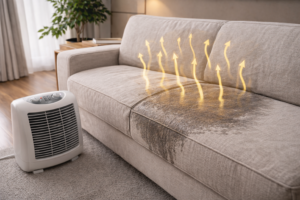
When warm air hits a wet couch, the surface may dry quickly. This rapid surface drying can create a barrier that slows moisture escaping from deeper layers. Instead of evaporating evenly, moisture may be driven inward or trapped below the fabric. This reflects how moisture can continue traveling inside a couch rather than leaving it. It is often safer to allow moisture to leave gradually rather than forcing the process.
Heat can also cause air inside cushions to expand. That expansion may push moisture sideways into areas that were previously dry. These shifts are subtle and easy to miss, which is why restraint is often the calmer choice.
Uneven Drying and Hidden Damp Areas
A couch rarely dries at the same rate throughout. Heating can exaggerate these differences by drying exposed areas first while shaded or compressed areas stay damp. Over time, these hidden damp zones may lead to odors or changes in texture. At that point, the couch may appear dry overall, even though moisture is still present. Moisture inside cushions can remain much longer than surface dryness suggests.
It can be tempting to keep increasing heat when results are not immediate. Stepping back instead of adjusting settings repeatedly can help avoid uneven drying patterns.
Material Sensitivity to Heat
Different couch materials respond differently to heat. Some fabrics tolerate warmth well, while others become stiff, distorted, or brittle. This stiffness can develop when fabric reacts poorly to heat during drying. Cushion materials can also react by changing shape or firmness when heated while damp. Because these reactions are not always immediate, the couch may seem fine at first.
If there is uncertainty about how a specific couch will respond, waiting without added heat becomes a reasonable default. There is rarely harm in allowing more time.
When Using Heat Becomes Riskier Than Waiting
Using a heater may be riskier when the couch is very wet, the room has low airflow, or the heat source is close to the furniture. In these situations, moisture is more likely to be trapped or redistributed rather than removed. Waiting for more natural drying conditions can reduce that risk.
It is also acceptable to decide not to intervene at all for a while. Doing nothing can feel unproductive, but it often preserves the couch better than trying to speed things up.
FAQ
Can heat ever help a wet couch dry?
In some situations it may, but there is no reliable way to know when it helps versus when it traps moisture. Caution reduces that uncertainty.
Why does the couch feel dry but still smell later?
Surface dryness does not reflect internal moisture. Heat can make this mismatch more likely.
Is gentle heat safer than strong heat?
Even mild heat changes moisture behavior. Assuming it is harmless can still lead to uneven drying.
What if the room is cold?
Cold conditions can slow drying, but adding heat too quickly can introduce other risks. Waiting for balanced conditions is often safer.