
After cleaning a couch, the most natural step is returning to normal use. The surface looks dry, the smell seems neutral, and daily life resumes. In many cases, this works without issue. In others, using the couch “as usual” too soon can quietly contribute to damage that only becomes visible later.
The difficulty lies in the middle ground. The couch does not feel wet, yet it may not be fully stabilized internally. Acting as if everything is complete can unintentionally stress materials that are still adjusting. Slowing down at this stage often prevents subtle but lasting consequences.
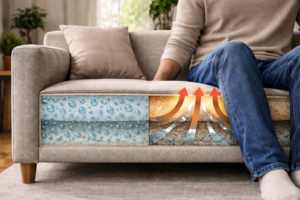
The Misleading Signal of Surface Dryness
Touch is the main indicator people rely on. If the fabric feels dry, the assumption is that the couch is ready. However, internal foam, batting, adhesives, and structural elements may still contain residual moisture.
When full weight is reintroduced too quickly, pressure compresses these layers while they are still settling. This can reshape internal alignment before drying has truly finished. The surface gives a green light, but the system underneath may still be recalibrating.
Pausing use slightly longer than feels necessary often reduces this risk.
The “Back to Normal” Assumption
There is a common belief that once visible signs of moisture disappear, the couch can handle normal traffic immediately. This assumption overlooks how materials behave during the final stages of drying.
Internal components can shrink, stiffen, or shift slightly as moisture leaves. Internal moisture can continue shifting even after a couch returns to normal use. Heavy or repetitive use during this phase may lock in uneven tension or compression patterns. The result may not appear instantly.
Choosing gradual reintroduction instead of full return can help materials settle more evenly.
Repeated Sitting Before Stabilization
Using the same spot repeatedly during early return can concentrate pressure on areas that are still vulnerable. Foam that has not fully rebounded from moisture exposure may compress more than usual.
Over time, this can create subtle sagging or uneven firmness. The damage does not announce itself immediately. It develops quietly and becomes noticeable only once the couch has fully dried.
Rotating seating positions and allowing rest between uses often limits concentrated stress.
Heat Combined With Pressure
Normal sitting introduces body heat. Heat softens materials slightly, which can increase mobility within internal layers. When moisture is still present, this mobility may redirect dampness deeper into padding or toward structural components.
This does not always cause harm, but it increases variability. Returning to long sitting sessions immediately after cleaning may extend internal adjustment.
Shorter use periods during the first phase of return can reduce cumulative stress.
Adhesive Vulnerability
Many couches rely on adhesives to hold fabric, foam, and frame components in place. Moisture can temporarily weaken these bonds. As drying continues, adhesives regain strength.
If full weight and movement are applied while bonds are still recovering, minor shifts can become permanent. A seam may pull slightly out of alignment, or padding may settle unevenly.
Waiting until internal conditions are more stable lowers the chance of locking in these distortions.
Hidden Frame Stress
Structural frames respond differently than fabric. If moisture reached wooden or composite components, expansion and contraction may still be occurring.
Resuming heavy use too soon can introduce stress while these materials are adjusting. Subtle creaks or alignment shifts may appear days later.
Reducing sustained pressure during this transition often allows structural elements to settle more predictably.
Why Damage Appears Later
One of the most confusing aspects is timing. Damage caused by premature normal use often appears after everything seems fine. Once materials finish drying, their final shape reveals the effects of earlier compression or shifting. This delayed outcome is similar to situations where couch damage appears after drying seems complete.
This delayed reveal makes it seem like something new has happened. In reality, the stress occurred earlier, during the in-between phase.
Recognizing this timeline helps avoid repeating the same cycle.
The Middle Zone: Not Wet, Not Stable
The most delicate stage is when the couch is no longer obviously wet but not fully stabilized internally. This middle zone creates uncertainty.
Treating the couch as fully ready can unintentionally introduce stress. Treating it as fragile forever is unnecessary. The balance lies in moderation.
Gradual return, limited repetition, and attention to subtle changes usually offer the safest path through this transition.
Signs Normal Use Is Too Soon
Some indicators suggest that normal use may be premature:
- Cushions feel cooler than expected
- Slight uneven firmness develops quickly
- Odors fluctuate after sitting
- Fabric appears mildly tensioned or puckered
When these appear, reducing use rather than increasing it often prevents further stress.
A Slower Return Often Prevents Bigger Problems
Returning to normal use is not inherently wrong. The risk lies in doing so abruptly while internal materials are still settling.
Allowing short rest periods, rotating use, and avoiding concentrated pressure during the first phase of return often prevents hidden damage from forming. Doing less during this window can protect long-term structure.
What feels like caution is often simply patience.
FAQ
Is it wrong to use a couch after cleaning?
No. The concern is not use itself, but how quickly and intensely it resumes while internal layers may still be adjusting.
Why does damage show up days later?
Internal stress from early compression may only become visible once materials finish shrinking or settling.
Does light use cause the same problem?
Light, varied use is generally less stressful than heavy, repetitive pressure. Moderation reduces concentrated strain.
How long should the transition period last?
There is no fixed timeline. Observing how the couch responds to limited use provides clearer guidance than assuming immediate readiness.
Using a couch normally after cleaning seems harmless. In some cases, however, the timing of that return shapes how materials settle internally. A slower transition through the middle zone often prevents hidden damage from emerging later
For a complete breakdown of how couch moisture moves, dries, and sometimes causes delayed odors, see our couch moisture and drying guide.