
Vacuuming a couch that is still damp can feel like a harmless way to speed things along. The surface may look clean, and removing loose moisture or debris can seem helpful. However, vacuuming changes pressure and airflow in ways that affect what happens inside the couch, not just on the surface. Taking a moment to understand those effects can prevent damage that is easy to miss at first.
Why Vacuuming a Damp Couch Feels Reasonable
Vacuuming is usually associated with cleanliness and maintenance, not risk. When a couch feels slightly damp, it can seem logical to vacuum to lift moisture or help fabric dry faster. This action often feels gentle compared to scrubbing or applying heat. Still, it helps to slow down and consider that vacuuming does more than touch the surface.
A couch is a layered structure, and suction affects all layers at once. Pausing before vacuuming allows time to consider whether the internal materials are ready for that pressure.
How Suction Changes Moisture Movement
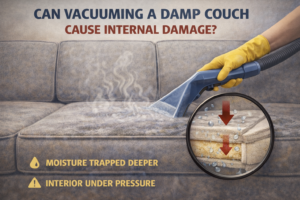
Vacuum suction creates negative pressure at the fabric surface. When a couch is damp, that pressure can pull moisture toward the surface unevenly. Instead of allowing moisture to leave gradually, suction can draw it into areas where it becomes concentrated.
In some cases, moisture may be pulled deeper into cushions or padding rather than removed. Moisture inside couch cushions can remain much longer than surface dampness suggests. Because this happens inside the couch, the surface can look improved while internal conditions quietly worsen. Waiting until moisture has stabilized reduces this risk.
Compression and Cushion Stress
Vacuuming often involves pressing a tool against the fabric. This compression changes the shape of cushions, even briefly. When cushions are damp, compression can force moisture sideways or downward into denser areas. This shows how moisture can shift inside a couch instead of leaving it evenly.
Repeated passes can amplify this effect. Even light vacuuming can interrupt drying patterns if the couch is not fully dry. Accepting a short pause before vacuuming can protect the cushion structure.
Why Damp Materials Are More Vulnerable
Materials behave differently when damp. Damp conditions make fabrics more susceptible to lasting texture changes. Foam, batting, and fabric fibers are softer and more easily distorted. Applying suction during this stage can change how those materials settle once dry. These changes may show up later as uneven texture or reduced support.
Because the couch often feels normal once dry, the connection between vacuuming and later changes can be hard to see. Slowing down during the damp phase can prevent these delayed effects.
Surface Cleanliness Versus Internal Conditions
Vacuuming can make the surface of a couch look and feel cleaner very quickly. This can create confidence that the couch is improving overall. However, surface results do not reflect what is happening inside the cushions.
It is easy to assume that if the fabric looks fine, the couch is fine. Treating internal drying as a separate process can help avoid that assumption.
When Vacuuming Can Make Things Worse
Vacuuming is more likely to cause issues when the couch is noticeably damp, the cushions are thick, or the vacuum has strong suction. In these situations, moisture movement becomes less predictable. The couch may seem fine initially, only to develop odors or texture changes later.
Choosing not to vacuum during this stage can feel counterproductive, but it often preserves internal balance. Doing less can be the safer option.
When Waiting Is the Lower-Risk Choice
Allowing a couch to dry without suction gives moisture time to move naturally. Once the couch is fully dry, vacuuming is less likely to alter internal conditions. Waiting can feel inconvenient, especially when the couch looks almost ready.
However, patience often prevents the need for further intervention. Giving the couch time before vacuuming can protect both appearance and structure.
FAQ
Can vacuuming actually pull moisture deeper into a couch?
It can, depending on cushion structure and moisture level. Waiting reduces uncertainty.
What if the couch only feels slightly damp?
Slight dampness can still mean deeper moisture. Treating it as fully wet is often safer.
Is gentle suction safe?
Even light suction changes pressure inside cushions. Assuming it is harmless can still carry risk.
Is it better to wait until the couch is completely dry?
Yes. Vacuuming once drying is complete is less likely to affect internal materials.