
DIY cleaning often starts with good intentions. A spill, a smell, or a visible stain creates pressure to act, and cleaning at home feels like the responsible response. Over time, though, repeated DIY efforts can quietly shorten a couch’s lifespan. The damage rarely happens all at once, which makes it harder to notice until the couch begins to fail in ways that can’t be undone.
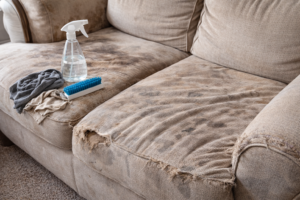
Warning Signs to Pause or Stop
One early warning sign is when the couch needs cleaning more often than it used to. If stains return quickly, odors linger, or the fabric looks tired soon after cleaning, the couch may already be under stress. This is often an early sign of when repeated cleaning starts to damage a couch rather than help it. Repeating the same actions in response can accelerate wear instead of solving the problem. Slowing down at this stage can prevent deeper damage.
Another sign is a gradual change in how the couch feels. Cushions may lose resilience, fabric may feel rough or stiff, or seams may seem less stable. These changes often appear slowly, making them easy to dismiss. Pausing to notice them can help avoid pushing the couch past a safe limit.
There’s also a point where cleaning feels more stressful than helpful. When each attempt creates new concerns, that tension is often a signal to stop rather than continue.
Why DIY Cleaning Can Make Things Worse
DIY cleaning tends to focus on visible issues, but couches are complex structures. Moisture, pressure, and friction don’t stay confined to the surface. Each cleaning attempt can affect padding, stitching, and internal layers in ways that aren’t immediately obvious.
Over time, small amounts of moisture can accumulate inside the couch. This helps explain why over-wetting a couch causes long-term damage that builds quietly. Even when the surface dries, internal layers may remain damp longer than expected. Persistent internal moisture is known to contribute to material breakdown over time. Repeating this cycle weakens materials and can lead to odor retention or structural breakdown. Continuing without a clear change in outcome often compounds the problem.
There is also the risk of uneven treatment. Some areas may be cleaned more frequently than others, leading to inconsistent wear. Fabric can thin, colors can shift, and texture can change. These effects rarely reverse once they appear, which is why stopping early can be protective.
How Repeated Cleaning Affects Couch Materials
Different parts of a couch age at different rates, and repeated DIY cleaning can speed up that imbalance. Fabric may wear down faster than cushions, or padding may collapse while the surface still looks acceptable. This mismatch reduces comfort and support even if the couch appears usable.
Cleaning can also stress seams and edges. These areas often absorb more moisture and handling than flat surfaces. Over time, stitching may loosen or fabric may fray, creating weak points that spread with continued use. Once this happens, further cleaning usually worsens the damage.
It’s worth recognizing that no couch is designed for frequent deep intervention. DIY methods, especially when repeated, can exceed what the materials are meant to tolerate. Choosing to pause can preserve remaining integrity.
When the Damage Becomes Irreversible
There is a stage where DIY cleaning no longer just shortens lifespan, but actively limits future options. A couch that has been overworked may not respond well to any further care, professional or otherwise. Odors may become embedded, cushioning may fail to recover, and fabric may lose its original structure.
At this point, continuing to clean can feel like chasing losses. Each attempt adds stress without meaningful improvement. Recognizing this moment and stopping can prevent wasting more time and effort on a couch that cannot return to its former state.
It’s important to remember that reaching this stage isn’t a personal failure. It’s often the result of gradual wear rather than a single mistake. Accepting that reality can reduce pressure to keep trying.
Why Doing Less Can Extend What’s Left
Sometimes the best way to protect a couch is to reduce intervention. Allowing materials to rest, dry fully, and stabilize can slow further decline. Doing less doesn’t fix existing damage, but it can prevent additional harm.
Stepping back also creates space to make clearer decisions. Without the urgency of constant cleaning, it’s easier to assess whether the couch is still meeting needs or if replacement is the more reasonable option. That pause can prevent impulsive actions that shorten lifespan even further.
In many cases, restraint extends usefulness more effectively than repeated effort. Knowing when to stop is part of responsible care.
FAQ
How does DIY cleaning shorten a couch’s lifespan?
Repeated moisture, pressure, and handling can weaken fabric, padding, and seams over time, even if each individual cleaning seems gentle.
Is occasional DIY cleaning always harmful?
Not necessarily. Problems usually arise from frequency and repetition rather than a single careful attempt.
What are signs that cleaning should stop?
Recurring issues, texture changes, loss of cushion support, or increased stress around cleaning are all signs to pause.
Can stopping early really help?
Yes. Stopping can prevent further material breakdown and preserve remaining comfort and structure longer than continued cleaning would.