
Cleaning a couch can easily turn into a cycle: a mark doesn’t disappear, so cleaning continues. It often feels uncomfortable to stop before the problem is fully gone. However, repeated cleaning is one of the most common moments where stopping is not only acceptable, but safer. This article is about recognizing when continuing is no longer the right choice—and why choosing to pause or do nothing is a valid and protective decision.
Warning Signs That It’s Safer to Stop
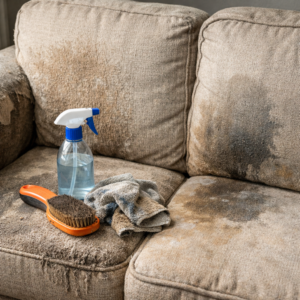
A clear sign is when the couch starts to change rather than improve. Fabric may feel stiffer, rougher, or less even than before. These changes are not an invitation to keep going; they are a signal that the material is under strain. At this point, hesitation is reasonable and stopping is often the correct response.
Another sign is uncertainty. If each cleaning attempt leads to different results—new marks, uneven color, or lingering dampness—that unpredictability matters. When outcomes are unclear, continuing becomes a gamble. Pausing removes that risk.
Why Continuing Is Often the Riskier Choice
Every cleaning attempt adds stress, even when done gently. Over time, moisture, friction, and handling accumulate. This cumulative stress is a common reason fabric changes, as explained in Why Scrubbing Changes Couch Fabric Texture. While a couch can tolerate occasional cleaning, repeated cleaning reduces its ability to recover. Excess moisture plays a key role in this decline, a risk described in Why Over-Wetting a Couch Causes Long-Term Damage.
There is a point where cleaning stops addressing the original issue and begins creating new ones. Continuing past that point usually increases harm rather than solving anything. Choosing to stop here is not giving up—it is avoiding unnecessary damage.
How Damage Builds Quietly When Cleaning Continues
Damage from repeated cleaning rarely appears suddenly. It builds slowly: fibers loosen a little at a time, cushions hold moisture longer, surfaces lose their original feel. This lingering internal moisture is also why smells persist, as discussed in Why Couch Cushions Hold Odors Longer Than Fabric. Because these changes happen gradually, it’s easy to miss when cleaning crosses from helpful into harmful. This delayed reaction is one reason Why Some Couch Materials Show Damage Weeks Later.
This is why waiting for obvious damage is risky. By the time damage is clear, it is often permanent. Pausing earlier, even when the couch still seems “mostly fine,” is a safer decision.
Situations Where Cleaning Again Is Not the Right Move
Areas that are cleaned over and over—such as the same cushion or spot—are especially vulnerable. Even careful repetition concentrates stress in one place. In these cases, stopping protects the material more than continuing ever could.
Another situation is cleaning again too soon. Even if the surface feels dry, the couch may not have fully recovered. Lingering moisture inside materials is a known risk factor in indoor environments linked to moisture-related damage. Continuing before it has rested increases the chance of lasting damage. Waiting, or doing nothing at all, is often the wiser choice.
Why “Just One More Time” Is Often the Point of Damage
When cleaning almost works, the urge to try again is strong. This moment is where many couches cross the line into permanent change. Each additional attempt narrows the margin for error.
Accepting an imperfect result can feel unsatisfying, but it often preserves the couch far better than pushing forward. Stopping before things get worse is a responsible choice, not a careless one.
When Doing Nothing Is the Safest Option
There are times when the best action is no action. Reducing cleaning frequency allows materials to stabilize instead of being constantly disturbed. This pause is not neglect—it is restraint.
Letting the couch be, even if it isn’t perfect, often causes less harm than repeated attempts to fix it. Choosing not to act can be the most protective decision available.
Why Stopping Early Keeps Options Open
Once repeated cleaning causes stiffness, texture changes, or internal stress, options become limited. These effects are difficult to reverse. Stopping before reaching that point preserves flexibility for the future.
Pausing also removes pressure to decide immediately. That space to wait and reassess can prevent a small, manageable issue from becoming permanent damage.
FAQ
How can someone know it’s time to stop cleaning?
When fabric behavior changes, results become unpredictable, or doubt increases, those are strong reasons to pause.
Is repeated gentle cleaning still a concern?
Yes. Even gentle cleaning causes wear when repeated. Frequency matters as much as intensity.
Why does the couch feel worse even though it looks cleaner?
Cleaning can remove dirt while altering texture or structure. Those changes are often more noticeable than the original problem.
Is stopping the same as giving up?
No. Stopping is often the most protective choice, preventing further damage and preserving the couch longer.