
It’s a familiar situation: a couch stain looks lighter after cleaning, the fabric feels acceptable while still damp, and it seems like the problem is on its way to being resolved. Then the couch dries—and the stain looks darker, larger, or more noticeable than before. This change often feels confusing and discouraging, especially when effort was already invested in careful cleaning.
What’s important to understand is that this effect is not unusual, and it doesn’t automatically mean the cleaning “failed.” In many cases, the drying process reveals what was already happening inside the fabric rather than creating a new problem. Slowing down at this stage can prevent further damage caused by reacting too quickly to what looks like a worsening stain.
This is similar to cases where stains appear lighter during cleaning but become more visible after the couch fully dries.
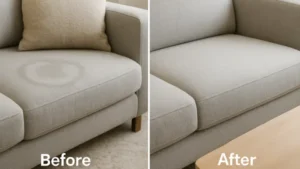
Why This Stain Is Difficult
Stains that appear worse after drying are often deceptive. While wet, fabric behaves differently: moisture changes how fibers reflect light, temporarily masking discoloration. As water evaporates, whatever residue was dissolved or moved during cleaning becomes visible again.
Another factor is movement. Moisture doesn’t stay still inside a couch. As it dries, liquid can pull residue outward or upward, redistributing stain material instead of removing it. This is especially common with stains that contain oils, sugars, or fine particles.
Because the stain may not be sitting only on the surface, drying can expose deeper contamination rather than indicate new damage. Recognizing this helps reduce the urge to immediately re-clean, which often makes the situation worse.
Trapped moisture often changes how residue settles as the couch dries.
Understanding the Fabric First
Not all couch fabrics respond to moisture in the same way. Some materials absorb liquid quickly, while others resist moisture on the surface but trap it underneath. When fabric dries unevenly, it can leave behind visible edges, shadows, or rings that weren’t noticeable before.
Ignoring fabric type is one of the most common reasons stains worsen after drying. Cotton, linen, and natural blends tend to absorb and hold residue, while synthetics may push it to specific areas as they dry. Textured or woven fabrics can also collect residue between fibers, making stains reappear once moisture is gone.
Pausing to consider the fabric before acting again can prevent repeated cycles of wetting and drying that gradually change the fabric’s appearance.
Uneven drying can leave visible rings or outlines even when the original stain was mild.
A Conservative Cleaning Method
When a stain looks worse after drying, the instinct is often to re-wet the area and try again. This reaction is understandable, but it carries risk. Each additional cleaning attempt introduces more moisture and increases the chance of residue being pushed deeper or spread wider.
A conservative approach focuses less on immediate improvement and more on avoiding escalation. This may involve allowing the fabric to fully stabilize before deciding whether further action is appropriate. Any additional treatment should be minimal, controlled, and limited to testing rather than full re-cleaning.
Resisting the urge to “fix it now” gives the fabric time to show whether the stain is truly worsening or simply becoming more visible as conditions normalize.
Fabric Types That Require Extra Caution
Some couch materials are particularly prone to looking worse after drying:
-
Natural fibers may darken unevenly as residue settles
-
Microfiber can show shading or texture changes after moisture exposure
-
Blended fabrics may dry at different rates within the same area
-
Older upholstery often reacts unpredictably due to prior wear or residue
With these materials, repeated cleaning can permanently alter color or texture. Recognizing when extra caution is needed helps prevent small visual issues from becoming long-term damage.
When Stopping Is the Safer Choice
A stain that looks worse after drying doesn’t always need immediate correction. In some cases, stopping allows moisture to fully dissipate and residue to stabilize, making the stain easier to evaluate later.
Continuing to clean while reacting to appearance changes can create a cycle where the fabric never fully recovers between attempts. This often leads to larger discolored areas, stiffness, or visible wear patterns.
Choosing to pause is not ignoring the problem. It’s acknowledging uncertainty and protecting the couch from further unintended changes. Sometimes the safest decision is to wait, reassess, and avoid adding new variables.
FAQ
Does a stain getting darker after drying mean it’s permanent?
Not necessarily. Drying can reveal residue that was already present. Acting too quickly can make removal harder.
Why did the stain look better when wet?
Moisture temporarily changes how fabric reflects light, which can hide discoloration until drying is complete.
Should the area be cleaned again immediately?
Immediate re-cleaning often increases spreading. Waiting can reduce the risk of further damage.
Can drying cause stains to move?
Yes. As moisture evaporates, residue can migrate within the fabric, making stains appear larger.
Is uneven drying a problem?
Uneven drying is a common cause of rings and shadows. Avoiding repeated wetting helps limit this effect.
When should cleaning stop altogether?
When repeated attempts change fabric texture, color, or stiffness, stopping is usually the safer choice.