
Scrubbing a couch often feels like a logical response when a stain or dirty area will not lift easily. The motion seems direct and effective, and it can give the impression that more effort will lead to better results. In reality, scrubbing is one of the most common reasons couch fabric changes in texture, sometimes permanently. Slowing down before applying force can help prevent damage that is difficult to reverse.
Why This Problem Is Easy to Underestimate
Fabric is designed to flex and move under normal use, but it is not made to withstand repeated friction in one small area. Scrubbing concentrates pressure and movement in a way everyday sitting does not. Because the damage is subtle at first, it is easy to assume nothing is going wrong.
Often, the fabric looks acceptable while it is still damp. This delay is one reason Why Some Couch Materials Show Damage Weeks Later, even when cleaning initially seems successful. Texture changes tend to appear after drying, which makes it harder to connect them to the scrubbing itself. Pausing early, even when progress feels slow, can prevent this delayed damage.
What Scrubbing Does at a Fiber Level
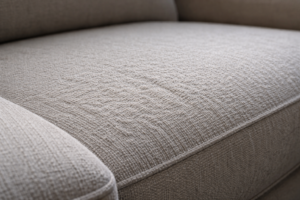
Couch fabric is made up of many small fibers woven or bonded together. Scrubbing pushes and twists these fibers repeatedly in different directions. Over time, this can cause them to loosen, fray, or flatten. Repeated friction is known to disrupt textile fibers, a concern commonly noted in guidance on textile fiber structure and surface wear.
Once fibers shift from their original position, they rarely return exactly to how they were. The surface may begin to feel rough, fuzzy, stiff, or uneven. Since these changes happen gradually, stopping before the fabric feels stressed is often safer than continuing to rub harder.
Why Texture Changes Are Often Permanent
Unlike surface dirt, texture is part of the fabric’s structure. When scrubbing alters that structure, cleaning more will not fix it. In some cases, this structural change shows up as stiffness, a pattern explained further in Why Couch Fabric Becomes Stiff After Cleaning. In fact, additional effort usually makes the problem more noticeable.
This permanence is why restraint matters. It can be frustrating to leave a stain partially visible, but that frustration is temporary. A rough or damaged texture affects the couch every time it is used, which makes caution the better long-term choice.
The Role of Moisture in Scrubbing Damage
Scrubbing is especially risky when fabric is wet. Moisture weakens fibers and reduces their ability to spring back. When pressure is applied at that point, fibers are more likely to stretch or break.
This combination of water and friction accelerates texture changes This overlap between moisture and force is also discussed in Why Over-Wetting a Couch Causes Long-Term Damage, which helps explain why fabric weakens more quickly when both are involved. . If the fabric begins to feel limp or overly soft while cleaning, that is often a signal to pause rather than push forward.
How Repeated Cleaning Makes It Worse
Texture damage is often cumulative. A single scrubbing session may not cause obvious problems, but repeated cleaning in the same spot increases the risk. Over time, this pattern can also affect how the fabric absorbs moisture, a shift explained in How Repeated Cleaning Changes Fabric Absorption. Each time, the fabric becomes a little less resilient.
Because this wear builds slowly, it can be mistaken for normal aging. In reality, it is often the result of well-intentioned cleaning. Taking breaks and cleaning less aggressively can slow this progression significantly.
Fabrics That Show Scrubbing Damage Faster
Some couch fabrics show texture changes more quickly than others. Materials with raised fibers, tight weaves, or soft finishes are especially vulnerable. Even gentle-looking scrubbing can disrupt their surface.
Other fabrics may hide damage at first but reveal it under certain lighting or after drying. Since it is difficult to predict how any fabric will react, assuming sensitivity rather than durability is usually the safer mindset.
Why Scrubbing Can Change How Fabric Reflects Light
Texture changes are not always felt immediately; sometimes they are seen instead. When fibers are disturbed, they reflect light differently. This can make cleaned areas look darker, shinier, or patchy compared to the rest of the couch.
These visual differences can stand out even when the couch is otherwise clean. Stopping before scrubbing alters the surface too much helps maintain a more uniform appearance.
When Slowing Down Is the Better Decision
If scrubbing does not improve a stain quickly, that is often a sign to reassess rather than escalate effort. Pushing harder usually affects the fabric more than the stain itself.
Accepting that not every mark can be removed without risk is part of protecting a couch. Doing less, more carefully, often preserves both appearance and texture better than aggressive cleaning.
FAQ
Can light scrubbing still damage fabric?
Yes. Even light scrubbing can cause changes if repeated or focused on one spot. Fabric reacts more to friction patterns than to how gentle the effort feels.
Why does the fabric feel rough after cleaning?
Roughness usually means fibers have been disturbed or lifted. Once that happens, texture often changes in a way that cannot be smoothed out completely.
Is scrubbing worse than blotting?
Scrubbing applies repeated motion and pressure, which increases risk. Limiting movement and stopping early generally reduces the chance of texture damage.
Should cleaning continue if the fabric starts to look different?
That change is often a signal to pause. Continuing may make the texture change more obvious and harder to live with over time.