
Couches absorb more liquid than most people realize, and by the time an odor becomes noticeable, the moisture has usually been sitting inside the cushions for days or even weeks. The instinct is often to spray something on the surface or cover the smell with air freshener, but those responses rarely address what’s actually happening deep in the foam and fabric layers. Rushing to treat the odor without understanding where the moisture is and why it hasn’t dried can turn a manageable situation into one that requires replacing the entire piece of furniture. Sometimes the hardest part isn’t fixing the problem—it’s resisting the urge to fix it too quickly. This is because moisture doesn’t stay on the surface, but moves through the internal layers of the couch in ways most people never see.
Understand the Material First
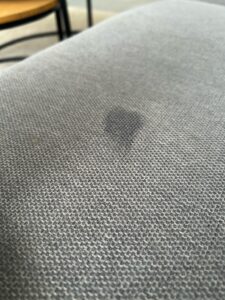
Couches are built in layers, and each layer responds to moisture differently. The outer fabric might be cotton, polyester, microfiber, or a blend, but underneath that is usually foam padding, batting, or a combination of materials that don’t dry at the same rate. When liquid seeps past the surface, it doesn’t simply evaporate back out the way it came in. Instead, it settles into the densest areas, where airflow is weakest and drying takes far longer than anyone expects.
Not all couch frames allow for air circulation underneath, which means moisture that reaches the bottom layer may have nowhere to go. Some couches have removable cushion covers, others don’t. Some have foam wrapped in protective barriers, others expose the foam directly to fabric. Without knowing how your specific couch is constructed, any cleaning method becomes a guess, and guessing with moisture often leads to worse problems than the original spill. There’s a real temptation to skip this step and just start cleaning, but doing so without understanding what you’re working with is one of the fastest ways to cause permanent damage that wasn’t there before.
Safe Methods That Often Work
If the moisture is recent and hasn’t yet caused an odor, sometimes the simplest response is the best one: pull the cushions apart, stand them on their sides, and let air reach all surfaces. This works when the liquid hasn’t penetrated too deeply and when the environment isn’t too humid. But if the room itself is damp, or if the couch is pushed against a wall with no airflow behind it, drying this way can take much longer than expected. In some cases, it doesn’t happen at all, and the moisture just redistributes itself rather than evaporating.
Blotting with towels can help absorb surface moisture, but pressing too hard or rubbing can force liquid deeper into the foam. The goal is to lift moisture out, not push it in, but that distinction is harder to manage in practice than it sounds. If the towel stops absorbing after a few presses, continuing to blot won’t accomplish much, and there’s a point where you’re just compressing the foam without removing any more water. Knowing when to stop is harder than knowing when to start.
Fans can speed up drying, but only if the moisture is accessible to airflow. Pointing a fan at a cushion cover won’t help if the wetness is trapped inside the foam, and running a fan for days in a room that’s already humid may not accomplish anything useful. Some people try placing cushions in direct sunlight, which can help with drying but can also fade fabric or cause certain materials to stiffen or crack. It often works, but not always in ways that leave the couch looking the way it did before.
Baking soda is frequently suggested for absorbing both moisture and odor, and it does pull some wetness out if the liquid is still near the surface. Sprinkling it on, letting it sit, and vacuuming it off can help in mild cases. But if the moisture has already moved deeper, baking soda won’t reach it, and layering on too much can leave a residue that’s difficult to fully remove. There’s also the risk of assuming the problem is solved just because the surface smells better, when the real issue is still developing underneath.
Common Mistakes to Avoid
One of the most common mistakes happens when someone notices a faint smell and immediately applies a cleaning solution or deodorizer without checking whether the area is still damp. Adding more liquid to a couch that hasn’t dried yet just extends the problem and can introduce new ingredients that attract dirt or leave sticky residues. The logic makes sense in the moment—something smells, so you clean it—but moisture needs to leave before anything else is added, and that order matters more than most people expect.
Another frequent misstep is assuming that if the surface feels dry, the inside must be dry too. Foam can hold moisture for a surprisingly long time, and the outer fabric often dries first, creating the illusion that the problem is resolved. This is especially common with thick cushions or couches that don’t have removable covers, where there’s no way to check what’s happening inside without disassembling something. By the time the odor becomes strong enough to indicate a problem, mold or mildew may have already started forming in areas that can’t be easily accessed or cleaned.
Using too much heat is another mistake that feels helpful but often isn’t. Hair dryers, heating pads, or space heaters seem like they should speed up drying, but they can also cause foam to break down, fabric to shrink, or adhesives inside the couch to weaken. Heat doesn’t always dry things faster if the moisture has nowhere to escape, and in some cases it just makes the problem spread or creates new issues with the materials themselves. The urge to speed things up is understandable, but heat is one of those tools that works well in some situations and causes harm in others, and it’s not always clear which situation you’re in until it’s too late.
When to Stop and Call a Professional
If the odor persists after the couch has been fully dried and aired out for several days, the moisture has likely caused damage that surface-level methods can’t reverse. Mold and mildew don’t always appear as visible spots—they can exist as spores deep in the foam where you can’t see or reach them. At that point, continuing to treat the couch yourself may just delay a decision that needs to be made anyway, and the longer mold grows, the harder it becomes to salvage the furniture. Persistent moisture can also create conditions for mold growth inside furniture, which is why environmental health agencies like the EPA warn that hidden mold often develops in damp, poorly ventilated materials.
Couches that have been soaked through—whether from a large spill, a leak, or flooding—often can’t be saved with home methods. The amount of moisture involved is too much for air drying alone, and attempting to clean or deodorize without professional extraction equipment usually just prolongs the process without improving the outcome. If the cushions feel heavy, cold to the touch, or if water can be squeezed out of them, stopping and getting professional help is almost always the safer choice than continuing to experiment.
Some couch constructions simply don’t allow for effective home drying. If the frame is solid wood that’s now swollen, if the springs are rusting, or if the fabric is glued rather than sewn and has started separating, those are structural problems that cleaning won’t fix. Professionals have tools to assess what’s happening inside the furniture and whether restoration is even possible, and sometimes the best decision is to stop early rather than invest more time and effort into something that’s already beyond repair.
Final Thoughts
Moisture problems in couches are rarely about the spill itself—they’re about what happens in the days and weeks afterward, when the liquid is out of sight and easy to forget. There’s no universal method that works for every fabric, every foam type, or every level of saturation, and the difference between a couch that recovers and one that doesn’t often comes down to how quickly the moisture is addressed and whether the drying process was thorough enough to reach the deepest layers. The truth is that sometimes the safest response is doing less rather than more, and knowing when to pause or stop entirely is just as important as knowing which methods to try. Careful judgment and a willingness to wait—or walk away—matter more than any specific technique.