
When a couch gets wet, water can quickly move past the upholstery and into the foam, batting, seams, and frame. The surface may feel dry within hours while moisture remains trapped deeper inside for much longer.
If that moisture stays trapped, it can lead to odors, water marks, swelling, or mold. Below, we’ll explain what happens inside a wet couch and how to tell when deeper drying is needed.
Where Does Water Go Inside a Couch?
| Couch Layer | What Water Can Do |
|---|---|
| Upholstery fabric | Spreads across the surface and may leave water marks |
| Batting | Holds moisture longer than the outer fabric |
| Cushion foam | Absorbs water deeply and can stay damp after the surface dries |
| Seams and hidden areas | Trap moisture where airflow is limited |
| Wood or engineered frame | May swell, warp, or stay damp for extended periods |
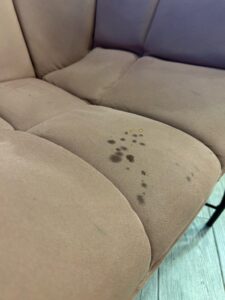
What Happens Inside a Couch When It Gets Wet?
Before doing anything, it helps to know what you’re actually dealing with. Couches are built in layers, and each layer reacts to moisture differently. The outer fabric might be synthetic microfiber, natural cotton, linen, or leather. Beneath that sits cushion foam, which can be polyurethane, memory foam, or latex. Under the cushions, there’s usually a wooden or engineered wood frame, along with webbing, springs, and more fabric. Some couches also contain batting, a fluffy layer between the foam and the outer fabric, which holds water like a sponge.
If you don’t know what’s inside your couch, it’s difficult to predict how the water will behave or what kind of damage might develop. Natural fabrics tend to absorb water quickly and hold it longer. Foam can trap moisture in its cells and take days to release it. Wood frames can warp or develop mold if they stay damp. Sometimes it’s worth pausing and accepting that you can’t know the full extent of what’s happening inside without disassembling something, and that uncertainty should influence how aggressively you try to fix things on your own.
How to Tell If Water Reached Inside the Couch
Water has probably moved beyond the surface if the cushion feels unusually heavy, cool, or damp when pressed. Darker fabric around seams, moisture underneath removable cushions, or a musty smell appearing later can also indicate that water reached the foam or internal layers.
A dry-looking surface does not necessarily mean the inside is dry. Foam and batting can hold moisture long after the upholstery feels normal to the touch.
Safe Methods That Often Work
If the spill is fresh and limited to the surface, blotting with a clean, dry towel can remove a surprising amount of liquid before it soaks deeper. Pressing down firmly and lifting repeatedly works better than rubbing, which pushes water further into the fabric and foam. This method helps when the spill is small and you act within the first few minutes, but it’s easy to assume you’ve gotten it all when moisture has already traveled past the top layer. Once water reaches the foam or frame, blotting the surface won’t reverse that.
Airflow can encourage drying, but it only works if the moisture is accessible to air. Pointing a fan at the wet area and leaving it running for several hours sometimes prevents mold growth, especially if the spill didn’t penetrate deeply. The challenge is knowing when to stop. Leaving a fan running for days might dry the surface while the inside remains damp, creating a false sense of security. If the room is humid or poorly ventilated, airflow alone may not be enough, and continuing to rely on it can delay recognizing a bigger problem.
Removing cushion covers, if they’re zippered and removable, allows you to inspect the foam and dry it separately. Some people place damp foam near a fan or in a well-ventilated space, which can work if the foam isn’t completely soaked. But foam that’s saturated often takes much longer to dry than it seems, and putting a damp cushion cover back on foam that’s still wet inside traps moisture and encourages mildew. There’s a point where it makes more sense to stop trying to speed up the process and accept that deep moisture requires more time or professional equipment to address properly.
Common Mistakes to Avoid
One of the most frequent mistakes is using too much water to clean a water-based stain. It seems logical to rinse or dilute the spill, but adding more liquid increases the amount of moisture the couch has to release. Upholstery doesn’t drain the way a hard surface does, and every additional ounce of water you introduce has to either evaporate or be absorbed into something. What starts as a small wet spot can become a large damp zone that reaches the frame and takes days to dry.
Heat is another common instinct that often backfires. Hair dryers, space heaters, or direct sunlight might seem like fast solutions, but intense heat can shrink certain fabrics, crack leather, or cause foam to break down. It’s also possible to dry the surface while leaving the interior wet, which creates the perfect environment for mold to grow where you can’t see it. The urge to speed things up is understandable, but heat rarely solves the problem as cleanly as it seems it should.
People also tend to assume that if the couch looks dry, it is dry. Moisture trapped inside foam or under fabric can linger for much longer than the surface suggests. Sitting on a couch that feels fine on top but is still damp underneath compresses the foam and pushes moisture into new areas, spreading the problem instead of resolving it. Sometimes the damage is already done before any visible signs appear, and continuing to use the furniture delays discovering it until mold or odor makes the issue undeniable.
When to Stop and Call a Professional
If the couch was soaked by a significant amount of water—such as from a burst pipe, roof leak, or flooding—attempting to dry it yourself is unlikely to address what’s happening in the frame and deep foam layers. Professionals use moisture meters, extraction equipment, and industrial fans that can pull water out of places household tools can’t reach. Once water has been sitting for more than 24 hours, the risk of mold increases sharply, and at that point, stopping your own efforts and calling someone trained to assess hidden damage is often the smarter choice.
Odor is another clear signal. If the couch starts to smell musty or sour, even after the surface feels dry, it means organic material inside is beginning to break down or mold is forming. Cleaning the outside won’t fix that, and continuing to treat only the surface can make the smell worse by disturbing trapped moisture without removing it. This is one situation where recognizing the limits of home remedies prevents wasting time and money on methods that won’t work.
Structural concerns should also prompt a call. If the couch frame is made of particleboard or MDF and has been wet for more than a few hours, swelling and warping are likely. Wooden springs or support slats can rot if they stay damp. These problems don’t have simple fixes, and trying to dry a compromised frame won’t restore its strength. A professional can tell you whether the furniture is worth saving or if the internal damage is too extensive to repair safely.
Final Thoughts
There’s no universal method for dealing with a wet couch because every couch is built differently and every spill behaves differently depending on the material, the amount of water, and how quickly you respond. What works for a small surface spill on synthetic fabric may do nothing for a leather couch with soaked foam, and what seems like a successful drying effort can still leave hidden moisture that causes problems later. The safest approach is often the one that prioritizes caution over speed—blotting gently, allowing natural airflow, and knowing when the situation is beyond what household methods can address. Careful judgment and a willingness to stop before making things worse matter more than any single technique.