
Most people assume their couch’s protective finish will last indefinitely. It doesn’t. Understanding why coatings fail helps explain why cleaning methods that once worked suddenly cause problems.
Why Factory Coatings Don’t Last
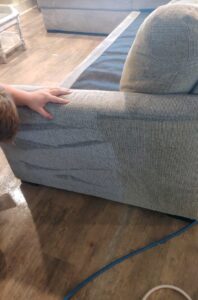
Manufacturers apply protective treatments to resist stains and moisture, but these layers wear away through normal use. Body oils, friction from sitting, and even sunlight degrade the barrier faster than most homeowners expect. The coating doesn’t disappear evenly—high-contact areas like armrests and seat cushions lose protection first while other sections still appear intact.
This uneven wear creates confusion when cleaning because one area of the couch may handle moisture while another absorbs it immediately. This uneven absorption often explains what happens once moisture reaches the inner layers of the couch.
How Daily Contact Accelerates Breakdown
Repeated pressure from sitting compresses fabric fibers and forces the protective layer to flex. Over time, microscopic cracks form in the coating. Skin contact introduces oils that chemically interact with many finishes, slowly dissolving the barrier. Pet claws can scratch through protective layers in ways that aren’t always visible to the eye.
The damage accumulates silently until a spill suddenly soaks in where it would have beaded up months earlier.
Why Heat and Light Matter More Than Expected
Direct sunlight doesn’t just fade fabric color—it breaks down the molecular structure of protective coatings. UV exposure makes finishes brittle and prone to flaking. Heat from radiators, floor vents, or even warm windows causes some coatings to soften and transfer to clothing or blankets.
A couch positioned near a window may have drastically different absorbency on one side compared to the other, which makes uniform cleaning impossible. This imbalance can also affect how the fabric dries after any exposure to moisture.
The Problem With Reapplied Protectants
Store-bought fabric protectors rarely bond to surfaces the way factory treatments do. They create a temporary layer that can trap dirt underneath or interact unpredictably with existing finishes. Some spray-on products leave a sticky residue that actually attracts soil faster than untreated fabric would.
Before applying any protectant, consider that it may complicate future cleaning more than it prevents stains.
Signs the Coating Has Already Failed
Water droplets that immediately disappear into the fabric indicate lost protection. Stains that spread rapidly rather than sitting on the surface suggest the barrier is gone. If the fabric feels different in texture between the seat and the back, the coating has likely worn through in the softer areas.
Once protective layers fail, the fabric underneath is often more vulnerable than it would have been without any coating at all.
Why This Matters for Cleaning Decisions
Cleaning products formulated for protected fabrics can damage bare fibers directly. What worked safely last year may now cause discoloration or texture changes because the barrier layer is no longer there. The couch’s care tag reflects the original finish, not its current degraded state.
Testing any cleaning method on a hidden area doesn’t fully predict results because coating breakdown varies by location. This is one reason repeated cleaning attempts often make the problem worse instead of better.
When Professional Assessment Makes Sense
Upholstery cleaners can sometimes identify coating failure that isn’t obvious visually. They may recognize patterns of wear that indicate whether cleaning is safe or likely to worsen the fabric’s condition. Some damage to protective layers is irreversible, meaning professional cleaning won’t restore the original performance.
If the couch is less than a few years old but already showing absorption problems, the coating may have been inadequate from the start.
FAQ
How long do protective coatings typically last?
There’s no standard timeline—high-use couches may lose protection within two years while rarely-used pieces might retain some barrier for five or more. Location, fabric type, and usage intensity all affect durability.
Can you tell if the coating is gone just by looking?
Not reliably. Fabric may look identical but behave completely differently. The only way to assess protection is by observing how liquids interact with the surface.
Do leather couches have the same coating issues?
Leather finishes can crack, peel, or wear through, but the breakdown process differs. Bonded or faux leather often deteriorates more dramatically than genuine leather.
Is it worth reapplying protectant sprays?
It depends on the fabric’s current condition. If the original coating has degraded unevenly, adding new protection may create blotchy results or interfere with the fabric’s natural properties.
Does regular vacuuming help preserve coatings?
It reduces abrasive dirt particles that accelerate wear, but it can’t prevent the chemical and UV breakdown that occurs regardless of cleaning habits.