
Most cleaning advice assumes fabric behaves the same way each time you treat it. It doesn’t. Every cleaning attempt alters how the material holds liquid, responds to pressure, and resists future stains. Understanding this helps explain why a method that worked once might fail—or cause damage—the second time.
Why Fabric Doesn’t Stay the Same
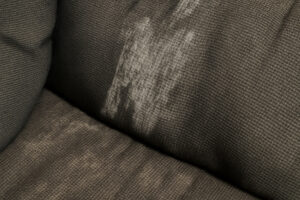
Upholstery fibers are designed with a specific structure that controls how they absorb and release moisture. When you apply cleaning solutions, blot with force, or scrub even gently, you’re compressing and reshaping those fibers at a microscopic level. Protective treatments wear away. The spaces between threads widen or collapse. What was once a predictable surface becomes unpredictable.
Some fabrics show this change visibly—a slightly flattened texture, a different sheen where you cleaned. Others hide it until the next spill spreads faster than it should have. This change often becomes noticeable once moisture moves beyond the surface layers of the couch.
How Cleaning Solutions Alter Absorption
Water-based cleaners don’t just evaporate. They leave behind trace minerals, soap residue, or bonding agents that weren’t there before. These deposits sit in the fiber weave and change how the next liquid behaves. A couch that once repelled coffee might suddenly pull it deeper after two or three cleaning cycles.
Solvent-based products can strip natural oils or factory coatings that were regulating absorption. The fabric may feel dry or stiff afterward—a sign that its original barrier is gone. Once that happens, the material often becomes more vulnerable, not less.
Before assuming a repeat cleaning will be safe, consider that the fabric is not in the same condition it was during the first attempt.
When Blotting Creates Weak Spots
Blotting is usually described as harmless, but repeated pressure in the same area compresses the cushion foam and loosens the fiber structure. The material begins to hold moisture differently—not just in that moment, but permanently. Spills that used to sit on the surface may now sink in immediately.
This is especially common on seat cushions where body weight already stresses the fabric. Adding multiple rounds of blotting on top of that compression accelerates breakdown. Some couches develop a kind of “sponge effect” in high-use areas where liquid seems to vanish into the cushion instead of staying on top.
If a spot has been cleaned more than twice, assume its absorption behavior has changed.
Fabrics That Show Damage Slowly
Microfiber and polyester blends can endure several cleanings before problems appear. Then, suddenly, a watermark won’t fade, or a clean area looks darker than the surrounding fabric. The damage was accumulating invisibly.
Natural fibers like cotton and linen often lose their structure faster. Repeated moisture exposure causes them to soften, stretch, or pill. Velvet and chenille are particularly unforgiving—their pile direction shifts permanently after the first aggressive cleaning, and subsequent attempts usually make it worse.
Leather and faux leather don’t absorb the way textile does, but cleaning products can strip their protective topcoat with each use. Once that layer is compromised, the material becomes porous in ways it was never intended to be. This kind of delayed reaction is especially common with certain synthetic materials.
Why “Rinse and Repeat” Is Risky Advice
The assumption that rinsing removes all residue is often wrong. Even distilled water leaves behind minerals if the fabric doesn’t dry completely. Layering cleaning attempts means layering invisible deposits, each one changing how the next product interacts with the fiber.
Some stains seem to “come back” after cleaning—not because the stain returned, but because residue left in the fabric is wicking up moisture from below or attracting new dirt. Cleaning it again usually makes this cycle worse, not better. Repeated attempts are a common reason fabric behavior changes over time.
If the stain hasn’t improved after the first or second attempt, adding more of the same approach rarely helps.
When Stopping Is the Safer Choice
There’s no universal number of cleaning attempts that’s safe. Some fabrics tolerate one. Others might handle three if the methods were gentle and the drying was complete. But once you notice texture changes, color shifts, or faster spreading of liquids, the fabric has already been altered.
Continuing at that point often means choosing between a visible stain and invisible structural damage that will shorten the life of the couch. Neither is ideal, but one is reversible with professional help. The other usually isn’t.
If you’re uncertain whether another round of cleaning will help or harm, that uncertainty is worth respecting.
FAQ
Can you restore fabric that’s been over-cleaned?
Sometimes, but not reliably. Professional cleaners may be able to rebalance pH, remove residue, or apply protective treatments, but they can’t rebuild fiber structure that’s been compressed or stripped. The earlier you stop, the more options remain.
Does letting fabric dry completely between cleanings prevent damage?
It reduces some risks, like mildew or residue buildup, but it doesn’t prevent the cumulative wear on fibers. Drying time helps—it just doesn’t reset the fabric to its original state.
How can you tell if a fabric has been weakened by cleaning?
Look for areas that feel different to the touch, absorb liquid faster than they used to, or show color variation under certain lighting. If water no longer beads up, the protective layer is likely compromised.
Is there a way to clean without changing absorption?
Not entirely. Even the gentlest methods cause some change. The goal is to minimize it by using the least intervention necessary and stopping before multiple rounds of treatment accumulate.
Should you avoid cleaning a couch more than once?
Not necessarily, but each cleaning should be treated as consequential. If the first attempt didn’t work, the second should use a different approach—not simply more of the same product or technique.