
Cleaning a couch often feels harmless, especially when water seems gentle compared to harsher products. Many people assume that using more moisture will loosen dirt and rinse problems away. In reality, excess water can quietly create damage that does not show up right away, which is why slowing down before soaking a couch is often the safer choice.
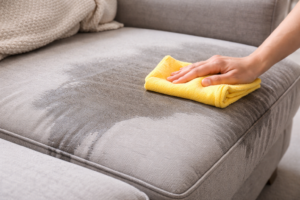
Why Over-Wetting Is More Serious Than It Looks
Water does not stay on the surface of a couch for long. Once applied, it tends to travel inward, moving past the fabric and into padding, seams, and structural layers. This movement is hard to control, and it is not always visible. Even when a couch looks only lightly damp, moisture may already be spreading underneath.
What makes this risky is that couches are not designed to dry evenly from the inside out. Moisture can become trapped in areas that receive little airflow. Pausing before adding more water can prevent this hidden buildup, which is often where long-term issues begin.
What Happens Beneath the Fabric
Inside most couches are layers that behave very differently from surface fabric. For a clearer mental picture of what’s happening under the surface, What Happens Inside a Couch When It Gets Wet can help explain why dampness is hard to control once it spreads inward. Padding can hold water like a sponge, and inner linings may dry much more slowly. When these materials stay damp, they can change in texture and density over time.
This internal moisture does not always cause immediate problems. In some cases, a couch may feel fine for days or even weeks. That delay can be misleading, so stopping early instead of trying to “flush” the couch with water can reduce the chance of damage developing later.
How Moisture Weakens Couch Materials Over Time
Repeated or heavy wetting can gradually weaken fibers and adhesives used inside a couch. Fabric may begin to lose its original tension, while padding can compress unevenly once it dries. These changes are subtle at first and easy to overlook.
Over time, weakened areas may become more prone to sagging, stiffness, or uneven wear. Since these effects happen slowly, it is often difficult to connect them back to a single cleaning session. Taking a cautious approach helps avoid setting these changes in motion.
Why Drying Is Rarely as Complete as It Seems
A couch that feels dry to the touch is not always dry inside. This disconnect is discussed further in Why Couch Fabric Feels Clean but Still Smells, which helps explain how hidden moisture can linger after cleaning. Surface airflow and warmth can create the impression that moisture is gone, even when deeper layers remain damp. This uneven drying is one of the main reasons over-wetting causes lasting harm.
When moisture lingers internally, it can affect how a couch smells and feels later on. At that point, additional cleaning may seem tempting, but pausing is often the better option, since more moisture can worsen the cycle rather than fix it.
Fabric Sensitivity and Uneven Absorption
Different fabrics absorb and release water at different rates. Some pull moisture inward quickly, while others hold it near the surface longer. These differences make it hard to predict how much water is “too much.”
Because absorption is uneven, over-wetting can lead to patchy drying and internal stress on the fabric. Slowing down and using less moisture reduces the chance of creating these uneven conditions in the first place.
Why Long-Term Damage Is Easy to Miss
The most challenging part of over-wetting damage is its delayed nature. A couch may look clean and refreshed shortly after drying. Problems such as odors, stiffness, or shape changes often appear much later.
By the time these issues show up, the original cause may no longer be obvious. This is why restraint during cleaning matters, even when results seem underwhelming at first. Stopping early can protect the couch better than trying to achieve immediate perfection.
When Less Cleaning Is Actually Safer
There are situations where continuing to clean feels productive but is actually risky. If fabric stops improving or begins to feel heavy or cool, it may already be holding too much moisture. At that point, pausing is usually safer than pushing forward.
Accepting a partial result can feel uncomfortable, but it often prevents deeper damage. In many cases, doing less preserves the couch’s structure better than attempting to wash problems away.
FAQ
Can water alone really damage a couch?
Yes, especially when used in excess. Water can travel into layers that are slow to dry, which is where long-term damage tends to start. Using restraint helps limit this risk.
Why doesn’t the damage show up right away?
Internal moisture dries slowly and unevenly. Changes to padding and fabric structure often happen gradually, which is why patience and caution during cleaning are important.
Is blotting safer than soaking?
In general, limiting moisture reduces risk. While no method is completely without uncertainty, stopping before fabric becomes saturated is usually the safer choice.
What should be done if a couch feels damp for a long time?
Allowing more time and airflow without adding additional moisture is often the best response. Adding more water can make the situation harder to control.