
When a couch starts to smell, attention often goes straight to the fabric on the surface. It seems logical, since that is what is touched and seen every day. However, odors often linger longer in the cushions than in the outer fabric, even after cleaning. Understanding why this happens can help reduce the urge to over-clean and instead encourage a more careful pause.
Why Odors Seem to Disappear but Then Return
Odors can fade temporarily when a couch is cleaned, especially while it is still damp. This can create the impression that the problem is solved. Once the couch dries, however, smells often come back, sometimes stronger than before. This confusing pattern is explored further in Why a Couch Smells Fine When Wet but Bad When Dry.
This happens because surface fabric dries faster than what is underneath. The cushion interior may still be holding onto odor-causing material. When that trapped moisture or residue slowly releases, the smell returns. Stopping early and allowing time before re-cleaning can prevent making this cycle worse.
Understanding the Structure of Couch Cushions
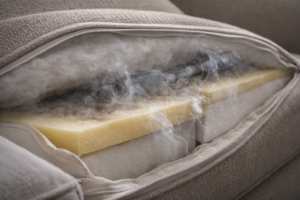
Couch cushions are not a single solid piece. They are usually made of layered materials designed for comfort, not for quick drying. These layers can include foam, batting, and inner covers, all of which behave differently than surface fabric. For a clearer view of how liquid moves beyond the surface, What Happens Inside a Couch When It Gets Wet helps explain why cushions behave differently than fabric.
Because cushions are thicker and enclosed, air does not move through them easily. Once odors reach these inner layers, they are harder to remove. Recognizing this structure can help explain why aggressive surface cleaning often fails to reach the real source of the smell.
How Odors Get Trapped Inside Cushions
Odors are often carried by moisture, oils, or small particles. Moist environments are known to trap and intensify smells, especially in porous materials affected by moisture and indoor air quality. When these penetrate past the fabric, they can settle deep inside the cushion. Unlike fabric, which releases moisture relatively quickly, cushion materials tend to hold onto it.
This trapped combination of moisture and odor has little opportunity to escape. This process is explained in more detail in How Moisture Trapped in a Couch Leads to Odors, which shows why smells persist once they settle deep inside. Even if the couch smells fine at first, the cushion can slowly release odor back into the room. Pausing instead of adding more moisture can limit how deeply smells are driven inside.
Why Fabric Releases Odors Faster
Surface fabric is thinner and more exposed to air. This makes it easier for moisture and odor to evaporate or dissipate. Light cleaning or even simple airing out can sometimes improve fabric odor without much intervention.
Cushions do not have this advantage. Their density and enclosed design slow down drying and airflow. Understanding this difference can help set more realistic expectations and reduce frustration when results are uneven.
The Role of Repeated Cleaning
When odors persist, it is tempting to clean the couch again and again. Each round of cleaning can push odors deeper into the cushion rather than removing them. Over time, this also affects how materials take in and release moisture, as described in How Repeated Cleaning Changes Fabric Absorption. Over time, this can make the problem harder to resolve.
Repeated wetting may also change how cushion materials behave, making them hold odors even longer. Choosing to stop and reassess instead of continuing can protect the couch from compounding issues.
Why Time Makes Cushion Odors Harder to Remove
Odors that stay inside cushions for long periods can bond with the materials themselves. Once this happens, simple surface cleaning is unlikely to reach them. The smell becomes part of how the cushion behaves, not just something sitting on top.
This does not mean the couch is ruined, but it does mean that patience matters. Giving the couch time to fully dry and breathe is often safer than trying to force quick results.
When Less Intervention Is the Better Option
If a couch smells worse after cleaning, it is often a sign that the cushions are holding moisture or residue. Continuing to clean in that state can lock odors in further. This risk is closely tied to Why Over-Wetting a Couch Causes Long-Term Damage, where excess moisture leads to deeper, longer-lasting problems. At that point, doing less is usually safer than doing more.
Allowing airflow, time, and rest can sometimes improve odor issues more than additional cleaning. Accepting slower progress can feel uncomfortable, but it often prevents longer-term damage.
FAQ
Why do cushions smell even when the fabric seems clean?
Because odors are often trapped inside the cushion layers, not on the surface. Fabric can release smells faster than dense cushion materials.
Can cushions dry completely on their own?
They can, but it often takes longer than expected. Rushing the process or adding more moisture can delay drying even more.
Why does the smell get stronger after the couch dries?
As trapped moisture evaporates from inside the cushion, it can release odors back into the air. This delayed effect is common and easy to misinterpret.
Is repeated cleaning a good solution for cushion odors?
Not always. Repeated cleaning can push odors deeper and make them harder to remove. Pausing and reassessing is often the safer choice.