
When a couch is cleaned, attention usually stays on the surface. Once the fabric looks damp or clean, it’s easy to assume the moisture is limited to what can be seen. In reality, moisture often moves well beyond the surface layer. Understanding how moisture travels inside a couch helps explain why drying takes longer than expected and why slowing down or doing less is often the safer response.
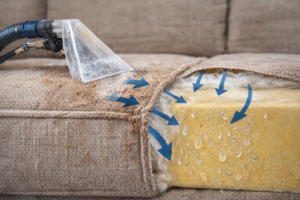
Why Moisture Rarely Stays on the Surface
Couch fabric is only the outermost layer of a multi-layer structure. Beneath it are padding, foam, batting, and internal covers. When moisture is introduced, it naturally seeks paths downward and outward, following gravity and absorbent materials.
Even light cleaning can push moisture past the fabric. Once this happens, surface drying no longer reflects what is happening inside. This hidden spread of moisture is a key reason described in Why Over-Wetting a Couch Causes Long-Term Damage. Recognizing this early supports the decision to pause rather than continue adding more moisture.
The Role of Fabric and Seams in Moisture Movement
Moisture does not travel evenly. Seams, stitching, and worn areas often act as entry points, allowing liquid to move faster into the couch interior. Fabrics that seem resistant on the surface may still allow moisture through these weaker paths.
Because this movement is uneven, some areas inside the couch may stay wet long after others feel dry. This unpredictability is a reason to hesitate instead of assuming the couch can handle more cleaning.
How Padding and Foam Absorb and Hold Moisture
Once moisture reaches padding or foam, its behavior changes. These materials are designed to compress and rebound, but they are also highly absorbent. Moisture can spread sideways, sink deeper, and become trapped. These internal movements are explored further in What Happens Inside a Couch When It Gets Wet.
Unlike fabric, foam and padding release moisture slowly. This slow release also explains odor persistence discussed in Why Couch Cushions Hold Odors Longer Than Fabric. Airflow inside a couch is limited, so evaporation takes time. Limited airflow and layered construction are well known factors in moisture retention within upholstered structures. Understanding this makes it clear why adding more water before full drying increases risk rather than improving results.
Why Moisture Can Travel Farther Than Expected
Moisture inside a couch does not always stay close to where cleaning occurred. It can wick through layers, move along internal structures, or settle in lower sections of cushions and frames.
This means a small damp area on the surface may correspond to a much larger wet area inside. When this possibility exists, stopping and allowing time becomes a safer choice than continuing to clean nearby sections.
The Delay Between Cleaning and Visible Effects
One of the most confusing aspects of moisture travel is timing. A couch may look fine while damp, then change hours or days later as internal moisture redistributes or slowly evaporates. This delayed response is one reason Why Some Couch Materials Show Damage Weeks Later.
This delay can make it tempting to clean again, assuming the first attempt failed. In reality, the couch may still be responding to the initial moisture. Waiting instead of acting again often prevents compounding the problem.
How Repeated Cleaning Changes Moisture Pathways
Every time a couch gets wet, its internal pathways can change slightly. Fibers loosen, padding compresses, and seams may become more permeable. Over time, moisture can travel faster and settle deeper than before. This history-dependent behavior is explained in How Previous Cleanings Change How a Couch Reacts.
Because of this history effect, a couch that handled moisture once may not handle it the same way again. Treating uncertainty as a signal to stop respects these changes rather than ignoring them.
Why Drying Feels Uneven and Incomplete
Surface dryness is misleading. Fabric can dry while moisture remains trapped below. This creates a false sense of completion and encourages further cleaning.
Uneven drying is not a problem to fix with more effort. It is a sign that the couch needs time. Allowing that time, rather than pushing forward, reduces the chance of long-term issues.
When Doing Less Is the Safer Response
When moisture has entered a couch’s interior, restraint becomes protective. Adding more water rarely solves the problem and often extends drying time or drives moisture deeper.
Choosing to pause, wait, or stop altogether can feel passive, but it actively prevents escalation. Understanding moisture travel helps justify this decision as informed rather than hesitant.
FAQ
Can a couch feel dry but still be wet inside?
Yes. Surface fabric dries much faster than padding and foam, which can hold moisture for a long time.
Does moisture always spread evenly inside a couch?
No. It often moves through seams, worn areas, and lower sections, creating uneven internal wetness.
Why do problems appear after the couch seems dry?
Because internal moisture continues to move and evaporate slowly, effects can show up later.
Is it safer to wait before cleaning again?
In most cases, yes. Waiting allows internal moisture to settle and reduces the risk of pushing it deeper.