
When a couch smells after cleaning or takes an unusually long time to dry, the issue is often blamed on the fabric. In many cases, the real cause sits underneath. Cushion construction plays a major role in how moisture behaves, how long it lingers, and whether odors develop or return. Understanding this internal structure helps explain why surface cleaning results can be misleading and why restraint is often the safer response.
Why Cushion Construction Matters More Than Fabric Alone
Cushions are built for comfort and support, not for fast drying. They usually contain multiple layers that interact with moisture in different ways. While fabric may dry relatively quickly, what happens beneath it determines the final outcome. This internal movement of moisture is explained in more detail in How Moisture Travels Inside a Couch After Cleaning.
Because cushion construction is hidden, it’s easy to assume that drying is complete once the surface feels dry. Slowing down and considering what’s happening inside helps prevent decisions that unintentionally trap moisture and odors.
The Layers Inside a Typical Couch Cushion
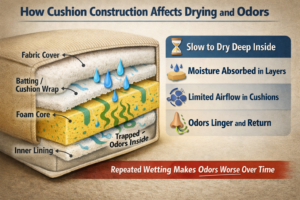
Most couch cushions contain a core material, often foam, surrounded by batting or wrap, and enclosed in an inner cover. Each layer has its own absorption and drying behavior.
Moisture introduced at the surface can move through these layers unevenly. These uneven internal shifts are described in What Happens Inside a Couch When It Gets Wet. Some materials absorb quickly, others slowly, and some hold onto moisture once it arrives. Knowing that these layers exist is a reason to pause rather than assume uniform drying.
How Foam Density Affects Moisture Retention
Foam varies widely in density and structure. Denser foams may feel supportive but can restrict airflow, slowing evaporation. More open foams may absorb moisture readily and spread it throughout the cushion.
Once moisture enters foam, it tends to stay longer than expected. This makes repeated cleaning risky, as additional moisture compounds what is already trapped. Waiting instead of re-cleaning often reduces the chance of long-term odor issues.
The Role of Batting and Cushion Wraps
Batting and wraps are designed to soften edges and improve comfort, but they are also highly absorbent. These layers can act like sponges, pulling moisture away from the surface and holding it close to the foam.
Because batting dries slowly and unevenly, odors can develop or persist even when the couch looks dry. Recognizing this behavior supports the decision to stop adding moisture and allow extended rest.
Why Airflow Inside Cushions Is Limited
Cushions are enclosed environments. Once assembled, very little air moves through their interior. This limited airflow significantly slows evaporation compared to exposed fabric. Limited airflow and layered construction are recognized contributors to moisture retention within upholstered structures.
As a result, drying timelines are often longer than expected. Treating slow drying as a signal to wait—rather than to intervene further—helps prevent odor buildup and material stress.
How Cushion Construction Encourages Odor Retention
Odors often bind to moisture and organic residue. When these reach the inner layers of a cushion, they become harder to release. Foam and batting can hold odor-causing compounds long after the surface seems clean. This internal odor behavior is examined more closely in Why Couch Cushions Hold Odors Longer Than Fabric.
This is why smells may fade temporarily and then return. Understanding that cushion construction supports odor retention makes it easier to accept that doing less is sometimes the safest option.
Why Repeated Wetting Makes Odors Harder to Remove
Each time a cushion gets wet, moisture pathways inside it can expand. Materials compress, shift, and become more receptive to future moisture. Over time, odors penetrate deeper and linger longer. This compounding effect is one reason discussed in Why Over-Wetting a Couch Causes Long-Term Damage.
This cumulative effect explains why repeated cleaning often worsens odor problems instead of solving them. Stopping early prevents reinforcing these internal pathways.
Why Drying Can Feel Incomplete Even After Time Passes
A cushion can feel dry on the outside while remaining damp inside. This delayed reaction aligns with patterns described in Why Some Couch Materials Show Damage Weeks Later. This disconnect leads to confusion and encourages additional cleaning attempts.
Instead of acting on surface cues alone, recognizing the limits of cushion drying helps justify waiting longer or stopping altogether. Time, rather than action, is often the safer response.
When Cushion Construction Should Change Expectations
Not all cushions are designed to tolerate moisture well. Some constructions are particularly prone to slow drying and odor retention. When these signs appear, expectations should shift away from complete removal and toward prevention of further damage.
Accepting the limits imposed by cushion construction reduces pressure to fix what cannot be safely corrected.
FAQ
Why does my couch smell even though the fabric feels dry?
Because moisture and odors are often trapped inside the cushion layers, not on the surface.
Do all cushions dry at the same rate?
No. Foam type, batting, and construction all affect how quickly moisture is released.
Can repeated cleaning make cushion odors worse?
Yes. Each wetting can push odors deeper and slow future drying.
Is it better to wait than to clean again?
In many cases, yes. Waiting allows internal moisture to dissipate and reduces the risk of trapping odors further.