
An appliance leak can feel urgent and unsettling. Water on the floor or moisture where it shouldn’t be immediately triggers concern, and the instinct is often to act fast. Mopping up, tightening something, or restarting the appliance can feel like the quickest way to regain control. It is often worth slowing down at this moment, because some appliance leaks are not just isolated spills. They can be early warning signs of broader risks affecting the home.
This article focuses on how to interpret appliance leaks in the moment without panic, and why restraint can be safer than rushing into action.
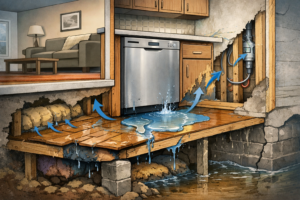
Why Leaks Feel Like a Simple Problem
Leaks are visible, immediate, and concrete. Water appears, and it feels logical to assume the solution is equally direct. Stop the water, dry the area, and move on.
In many cases, this is enough. However, pausing before assuming the leak is self-contained allows space to consider whether the leak is a symptom rather than the full problem. Not every visible issue represents the full scope of what is happening.
Visibility can oversimplify risk.
How Leaks Can Signal Hidden Conditions
Appliances interact with plumbing, drainage, flooring, and surrounding materials. A leak may indicate pressure changes, drainage resistance, material fatigue, or movement that extends beyond the appliance itself.
Water often travels along paths that are not immediately obvious. This is similar to how appliance leaks damage floors before you notice any visible surface signs. By the time it appears on the surface, it may have already passed through hidden areas. Slowing down to consider where the water might have come from, not just where it appeared, can reveal why leaks deserve careful attention.
The first visible spot is rarely the first affected area.
Why Immediate Action Can Increase Risk
The urge to fix a leak quickly is understandable. However, acting too fast can unintentionally increase risk. Restarting an appliance, wiping everything dry, or blocking water flow without understanding the cause can hide important clues.
Pausing does not mean ignoring the situation. It means creating space to observe before altering conditions. Doing less for a short time can preserve information about how and why the leak occurred.
Speed can trade safety for certainty.
When a Leak Points Beyond the Appliance
Some leaks are warnings because they reflect stress elsewhere. Flooring that has shifted, seals that no longer align, or drainage that no longer flows freely can all cause water to escape where it didn’t before.
In these cases, the appliance may be reacting to a larger change in the home. This broader context reflects why appliance problems often trigger secondary home damage beyond the initial leak. Slowing down to ask whether anything around the appliance has changed can help reframe the leak as part of a broader pattern.
The appliance may be responding, not failing.
Why Drying the Area Isn’t the Same as Resolving Risk
Drying visible water is important, but it does not address moisture that may have moved into unseen spaces. Materials beneath floors or behind cabinets can remain damp even after surfaces look normal.
This hidden moisture can create secondary problems later. Pausing to acknowledge that dryness on the surface does not equal resolution underneath can prevent false reassurance.
What looks dry may still be active.
How Repeated “Minor” Leaks Change the Picture
A single small leak may not feel serious. When similar leaks happen more than once, even if they seem unrelated, the risk profile changes.
Repetition suggests an ongoing condition rather than a one-time event. Slowing down to recognize patterns instead of treating each leak as separate can help identify when a larger issue may be developing.
Patterns matter more than size.
Why Location Matters More Than Volume
The amount of water involved in a leak is not always the most important factor. Where the leak appears often matters more. Leaks near walls, under flooring, or in confined spaces tend to pose higher risk because water is harder to detect and remove.
Pausing to assess location before reacting can help prioritize caution over quick fixes.
Small leaks in hidden places can matter more than large spills in open areas.
When Stopping the Appliance Is the Safer First Step
In uncertain situations, stopping the appliance can be safer than trying to “see if it keeps working.” Continued operation may push more water into hidden areas or increase stress on already affected materials.
This pause does not require diagnosis or repair. It simply limits further change while understanding catches up. Doing less temporarily can reduce the chance of escalation.
Stopping is not the same as solving, but it can prevent worsening.
Why These Moments Create Pressure
Leaks create pressure because they feel urgent and personal. Water damage carries emotional weight, and the desire to regain control is strong.
Recognizing this pressure can help slow reactions. Pausing to separate urgency from action can lead to calmer, safer decisions.
Pressure narrows focus; restraint widens it.
When a Leak Is a Signal, Not an Emergency
Not every leak means immediate danger. Some are signals that deserve attention without panic. The goal is not to overreact, but not to minimize either.
Slowing down allows time to observe, contain obvious water, and avoid actions that could hide the cause. This balanced response can protect both the appliance and the home.
Calm attention often reveals more than fast action.
FAQ
Does every appliance leak mean serious home damage?
No. Many leaks are minor. The risk increases when leaks repeat, appear in hidden areas, or behave unpredictably.
Should the appliance always be turned off immediately?
Not always, but pausing operation can be safer when the cause is unclear. Doing less briefly can prevent escalation.
Why shouldn’t leaks be fixed right away?
Immediate fixes can hide clues. Slowing down first helps preserve information about the cause.
What’s the safest mindset when discovering a leak?
Restraint and observation. Stopping panic-driven actions can reduce risk while allowing clearer assessment.