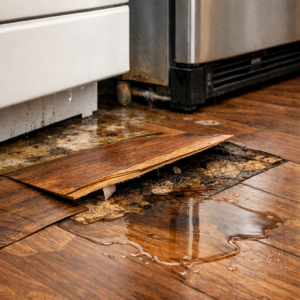
Appliance leaks are often noticed only after visible damage appears. By the time flooring looks warped, stained, or uneven, moisture may have been present for a long time. Early on, leaks can stay hidden beneath appliances or spread thinly under flooring. It is often worth slowing down here, because floor damage usually begins well before obvious signs appear.
Understanding how leaks affect floors over time helps explain why damage can feel sudden. What looks like a recent problem is often the result of gradual, unnoticed exposure.
Why Early Leaks Stay Invisible
Small appliance leaks rarely create immediate puddles. In some cases, water under a washing machine means damage beyond the appliance and into surrounding materials like flooring. Water may drip slowly, spread outward, or be absorbed by surrounding materials. When this happens beneath a washing machine, dishwasher, or refrigerator, the surface often stays dry.
Flooring materials can hide moisture effectively at first. Some layers absorb water while others trap it underneath. Pausing to consider where water might travel, rather than where it appears, can help explain why leaks go unnoticed.
Hidden does not mean harmless.
How Moisture Moves Under Flooring
Once water reaches the floor, it tends to follow paths of least resistance. It can move along seams, under underlayment, or into gaps between materials. This movement is slow and uneven, which makes it hard to detect.
Different floor types react differently. Some swell slightly, others soften underneath, and some appear unchanged until damage is advanced. Slowing down assumptions about how water behaves can clarify why surface inspection alone is unreliable.
Moisture often spreads sideways before it shows upward.
Why Floors Can Look Fine While Damage Develops
Many floors are designed to look intact even when conditions underneath are changing. Protective finishes and surface layers can mask early deterioration.
Underneath, adhesives may weaken, materials may expand and contract, and structural layers may begin to lose integrity. Pausing to remember that appearance reflects only the top layer can prevent false reassurance.
Visual calm can hide structural change.
How Repeated Minor Leaks Add Up
A single small leak may dry without obvious impact. The problem arises when leaks repeat. Each exposure leaves behind residual moisture or stress, even if the surface dries. This gradual accumulation mirrors how washing machine leaks change behavior as internal damage spreads over time.
Over time, this repetition can change how the floor responds. Swelling may become permanent, or materials may stop returning to their original shape. Slowing down after repeated “minor” incidents can help recognize accumulation before it becomes visible damage.
Repetition matters more than intensity.
Why Damage Often Appears Suddenly
Floor damage from leaks often seems to appear overnight. A buckle, stain, or soft spot may show up with little warning. In reality, a threshold has been crossed. This reflects why appliance damage rarely stays at the same severity level before becoming visible.
Once materials lose enough strength or stability, visible failure happens quickly. Pausing to reframe “sudden” damage as delayed damage can make the timeline easier to understand.
The failure is sudden; the process is not.
How Floor Construction Influences Damage
Check the floor material before deciding whether a leak is a surface-cleaning problem. Laminate planks may swell at their seams if water reaches the fiberboard core; a dry-looking finish does not show what happened beneath it. Wood flooring can cup or change shape as moisture levels differ between its upper and lower surfaces. Vinyl and tile surfaces may tolerate surface water better, but water can still enter through edges, grout defects, or gaps and affect the underlayment.
Look for raised seams, soft or springy areas, persistent odor, darkened edges, and baseboards pulling away from the wall. Photograph the changes without lifting flooring or moving a heavy appliance. If the subfloor may be wet, a qualified restoration professional can assess moisture below the surface and recommend appropriate drying; do not assume a fan on the visible floor is enough.
For material-specific cleanup considerations, see the EPA water-damage cleanup table. Its guidance distinguishes surface materials from the layers beneath them.
Why Cleaning Can Make Things Look Worse
When floor damage finally becomes visible, cleaning often makes it more noticeable. Moisture, heat, or pressure from cleaning can accentuate swelling, staining, or separation.
This can create the impression that cleaning caused the damage. Pausing before drawing that conclusion can help separate the moment damage became visible from when it actually formed.
Visibility does not equal cause.
What to Do When You Discover a Leak Beside an Appliance
- Protect yourself first: if water is near outlets, cords, or electrical equipment, do not touch the equipment or stand in water to unplug it. Have power isolated by a qualified person if necessary.
- Stop the source when safe: turn off the appliance’s accessible water-supply valve if you can reach it without entering a wet electrical area. If you cannot, contact the appropriate professional.
- Document the extent: take photos of the appliance, nearby seams, baseboards, and adjacent room. Note when the leak was first seen and whether it happens during filling, draining, or while idle.
- Dry promptly, but check below the surface: remove accessible clean standing water only when the area is electrically safe. If flooring is lifting, soft, or still damp, seek a moisture assessment instead of sealing or covering it.
The EPA advises prompt drying of water-damaged areas, ideally within 24–48 hours to help prevent mold. That window is a prevention target, not proof that a subfloor has dried. For electrical hazards around water, follow Ready.gov’s safety guidance.
FAQ
How can I tell if water reached the subfloor?
Visible clues include swollen seams, soft spots, a recurring musty smell, or staining at the baseboard. These are warning signs, not a measurement; a restoration professional can check moisture below the finish.
Should I run a fan on wet laminate?
Air movement may help dry an exposed, clean surface, but it cannot confirm that moisture trapped beneath planks is gone. Address the leak and evaluate affected layers before reinstalling coverings.
When should I call a professional?
Call promptly if water reached electrical equipment, the leak cannot be stopped safely, flooring is buckling, water may be contaminated, or moisture has entered concealed materials.
Can the floor look normal after a serious leak?
Yes. A finish can hide damp underlayment or subfloor. Compare photos over time and do not rely on touch alone to confirm drying.