After a couch has been cleaned or exposed to moisture, it can look dry on the surface long before it is actually dry inside. This gap between appearance and reality is where many long-term problems begin. A brief sit does not by itself establish damage, but if the cushion or seams still feel damp, it is sensible to wait and check the upholstery care instructions before regular use. Slowing down at this stage is often less risky than trying to fix problems later.
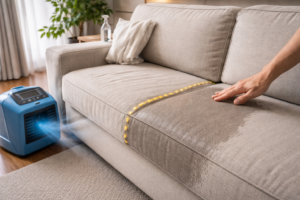
Why a Couch Can Feel Dry Before It Really Is
Couch fabrics are designed to release surface moisture faster than the layers beneath them. Air movement and room temperature can make the outer fabric feel dry to the touch while internal padding still holds dampness. This creates a false sense of readiness. This is because moisture can continue moving inside a couch even after the surface no longer feels wet. It can help to pause and assume the couch is still vulnerable, even if it no longer feels wet.
Surface dryness does not guarantee that the padding underneath is dry. Before using the couch, check removable cushions and seams for remaining dampness, follow the upholstery care label, and keep air circulating. If the padding stays wet or develops a musty smell, seek advice from a qualified upholstery cleaner rather than adding more water.
What Sitting Too Soon Changes Inside the Couch
Sitting compresses damp cushions, but the effect on drying depends on the upholstery, padding, and how wet the couch is. Avoid using cushions that still feel damp or cool compared with surrounding dry areas. Check the manufacturer’s care label, improve room ventilation, and allow removable cushions to dry according to their care instructions. If moisture persists inside the padding or there is a musty smell, ask an upholstery-cleaning professional to assess it rather than repeatedly soaking the fabric.
Repeated sitting on a damp cushion may compress the padding and temporarily restrict airflow, but it does not prove that the fabric has been damaged or that drying will be uneven. Check accessible seams and the undersides of removable cushions for dampness, and follow the upholstery care label before returning the couch to regular use.
How Moisture and Pressure Interact Over Time
Pressure may compress damp padding, but sitting does not by itself prove that water has moved deeper or that permanent damage has occurred. Check seams and cushion undersides for remaining dampness before resuming normal use. Remaining damp areas can be difficult to detect from the surface alone; if a musty odor or unusual texture develops, stop using the cushion until the cause is assessed. This is one reason couch cushions tend to hold odors longer than the outer fabric layers. At that point, the cause is harder to trace.
It can be tempting to “check progress” by sitting briefly, but doing less often preserves the conditions needed for even drying. For a practical checklist before resuming use, read when you can sit on a couch after cleaning; for drying-time factors, see how long a couch takes to dry. Neither a fixed waiting period nor a dry-feeling surface alone guarantees that deeper padding is dry.
Fabric and Cushion Differences That Matter
Different couch materials respond differently to early use. Some fabrics rebound quickly, while others hold moisture close to the surface. Cushion construction also matters, as thicker or denser padding tends to release moisture more slowly. Because these differences are not always visible, caution is often the safest assumption.
If the cushion construction is unclear, check the manufacturer’s care label before attempting further cleaning or drying. A removable cushion cover does not necessarily mean the inner filling can be washed or heated. Avoid putting foam inserts in a dryer unless the manufacturer explicitly permits it; if the filling remains damp despite ventilation, seek upholstery-specific advice.
When Waiting Is the Safer Choice
If the couch was heavily damp, exposed to humidity, or cleaned more than lightly, waiting is usually the lower-risk path. A musty odor or persistent dampness can signal that the upholstery needs more drying or assessment, but these signs do not establish that sitting caused the problem. Choosing not to sit, even when it seems fine, can prevent those outcomes.
Before returning the couch to regular use, check the upholstery care label, feel along seams and the undersides of removable cushions with clean, dry hands, and compare any cool or damp spots with an unaffected area. Keep cushions positioned for airflow only as their care instructions allow. If deep padding remains wet, the smell turns musty, or dampness keeps returning, contact a qualified upholstery cleaner rather than applying more water or heat.
FAQ
Can sitting briefly really make a difference?
Brief sitting may compress damp padding, but it does not establish that moisture has moved deeper or that damage occurred. If the cushion still feels damp, allow more drying time and follow the upholstery care instructions.
What if the couch only feels slightly damp?
Slight dampness can still mean deeper moisture. Treating “almost dry” as still wet can reduce risk.
Is surface dryness a reliable sign?
Surface dryness alone does not show what is happening inside the cushions. It helps to assume there is more moisture than can be felt.
Is it ever okay to use the couch early?
In some situations it may not cause obvious issues, but there is no clear way to predict that outcome. Waiting removes that uncertainty.