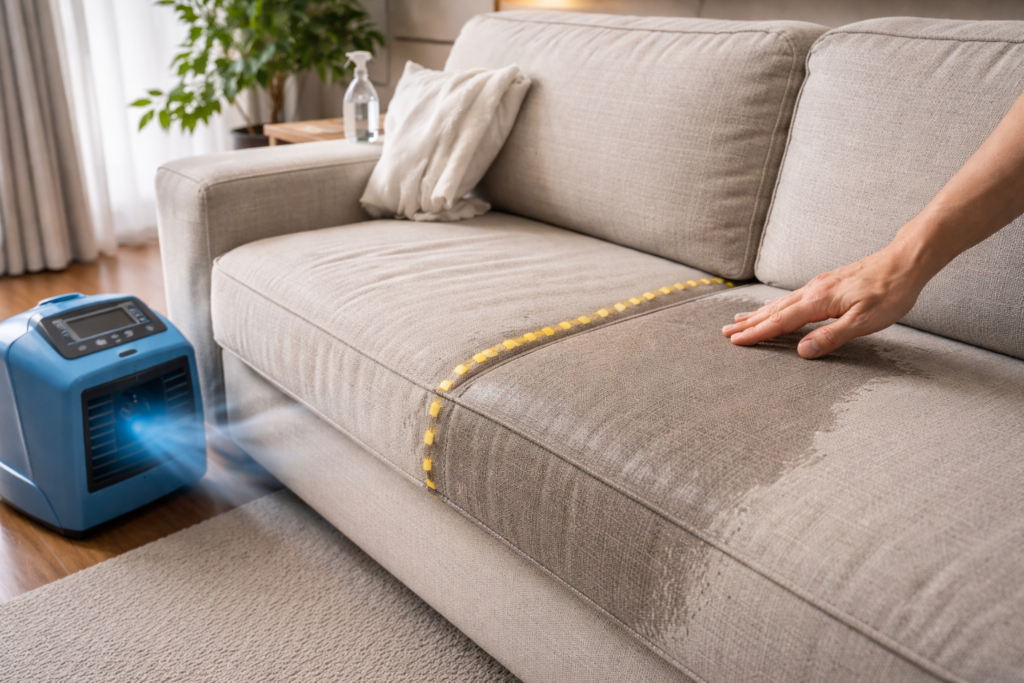
When Can You Sit on a Couch After Cleaning?
After cleaning a couch or dealing with a fresh water spill, one question comes up quickly:
is it safe to sit on the couch before it’s completely dry?
At first glance, it might not seem like a big deal. The surface may feel only slightly damp, and sitting down feels harmless. However, moisture inside couch cushions behaves differently than it appears on the outside.
Before using the couch again, check the fabric, seams, and undersides of removable cushions for remaining dampness. Keep air moving and follow the upholstery care instructions or your cleaner’s advice. If moisture reached deep padding or a musty odor persists, consider a professional assessment rather than assuming the couch is fully dry.
Why a Couch Can Feel Dry but Still Be Wet Inside
A couch does not dry evenly.
The outer fabric layer often dries much faster than the inner padding. While the surface may feel dry to the touch, moisture can still be trapped deep inside the cushions.
This happens because:
- Fabric dries quickly when exposed to air
- Foam and padding hold moisture longer
- Airflow may not reach the inner layers
As a result, what feels dry is sometimes only partially dry.
What Happens If You Sit on a Damp Couch
Sitting on a couch before it’s fully dry can affect both the material and the drying process.
Here are the main risks:
1. Cushion Compression Can Limit Airflow
Sitting compresses the cushion and may reduce airflow through damp layers while weight is applied. Whether this materially changes drying depends on the cushion construction and how much moisture remains; pressure alone does not prove that water has moved deeper. Avoid using cushions that still feel damp, and follow the upholstery maker’s care instructions.
This can:
- temporarily restrict airflow while the cushion is compressed
- leave deeper padding damp even when the surface feels dry
- make it harder for airflow to remove the water
2. Increased Risk of Odors
Trapped moisture creates conditions where odors can develop over time.
Even if the couch smells fine at first, you might notice:
- a musty smell appearing later
- a “damp fabric” scent that doesn’t go away
- odors returning after a few days
3. Potential for Mold or Mildew
If moisture stays trapped long enough, it can create an environment where mold or mildew may begin to form.
This risk increases when:
- the room has high humidity
- airflow is limited
- the couch was heavily soaked during cleaning
4. Fabric Marks or Uneven Drying
Pressure on damp upholstery may leave temporary marks, but a mark alone does not establish that sitting caused uneven drying. Check the fabric care label, avoid further pressure while the material is damp, and seek upholstery-cleaning advice if a stain or ring persists.
These may appear as:
- darker patches
- water rings
- areas that dry slower than others
How Long Should You Wait Before Sitting
There is no single exact time, but general drying ranges can help guide you.
Factors that affect drying time:
- Light surface cleaning: may dry sooner when only the fabric is damp and ventilation is good
- Moderate moisture: allow more time and check seams, cushion undersides, and any removable inserts
- Deep cleaning or soaking: internal padding can take longer than the outer fabric
The key factor is not the clock alone, but whether the inner layers are dry. For a fuller explanation of the variables, see how long a couch takes to dry.
How to Tell If a Couch Is Truly Dry
Instead of relying only on touch, check for these signs:
- No cool or damp feeling when pressing into the cushion
- No persistent musty odor near the cushions or seams (without sitting on them)
- Fabric and inner padding feel consistent across all areas
- No visible dark patches
If removable cushions or inserts remain cool or damp at their seams or underside, allow more drying time. A dry-feeling surface alone cannot confirm that the foam is dry.
How to Speed Up Couch Drying Safely
If you want to use your couch sooner, improving drying conditions can help.
Effective methods include:
- Opening windows to increase airflow
- Using a fan directed at the couch
- Turning on air conditioning or a dehumidifier
- Separating cushions to allow air to reach all sides
Avoid using excessive heat, as it can damage fabric or set certain residues deeper into the material.
Why a Brief Sit Is Not a Reliable Dryness Test
Sitting briefly is not a reliable test of whether the cushion has dried internally.
A quick check can be misleading even when:
- the couch is only slightly damp
- the cleaning involved minimal water
- airflow is strong and continuous
Even then, it’s better to limit pressure and avoid long periods of use until the couch is fully dry.
When You Should Definitely Wait
It is best to avoid sitting completely when:
- the cushions feel heavy or dense
- there was a deep cleaning or large spill
- the room is humid or poorly ventilated
- drying has been slow
If the cushion still feels damp at the seams or underside, keep it out of use and improve airflow according to the upholstery care instructions. Persistent moisture or a musty odor warrants professional advice.
Conclusion
Sitting on a couch before it’s fully dry might seem harmless, but it can affect how moisture behaves inside the material.
Even when the surface feels dry, the inner padding may still hold water. Pressure may temporarily reduce airflow through damp padding, but it does not by itself establish that damage will occur. Check removable cushions and seams for lingering dampness, and follow the upholstery care instructions before returning the couch to regular use.
Waiting until the couch is completely dry is usually the safer choice, especially after deep cleaning or heavy spills. See more couch cleaning guides.