
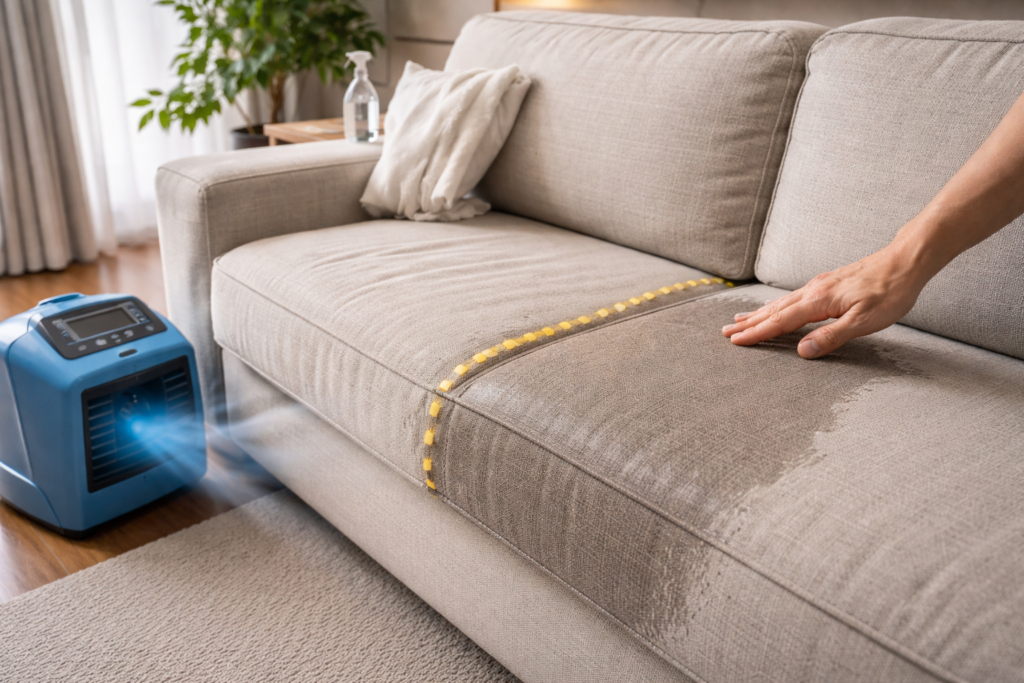
Introduction
After cleaning a couch or dealing with a spill, one question comes up quickly:
is it safe to sit on the couch before it’s completely dry?
At first glance, it might not seem like a big deal. The surface may feel only slightly damp, and sitting down feels harmless. However, moisture inside couch cushions behaves differently than it appears on the outside.
Understanding what happens inside the fabric and padding can help you avoid long-term damage, odors, or even hidden mold growth.
Why a Couch Can Feel Dry but Still Be Wet Inside
A couch does not dry evenly.
The outer fabric layer often dries much faster than the inner padding. While the surface may feel dry to the touch, moisture can still be trapped deep inside the cushions.
This happens because:
- Fabric dries quickly when exposed to air
- Foam and padding hold moisture longer
- Airflow may not reach the inner layers
As a result, what feels dry is sometimes only partially dry.
What Happens If You Sit on a Damp Couch
Sitting on a couch before it’s fully dry can affect both the material and the drying process.
Here are the main risks:
1. Moisture Gets Pushed Deeper
When weight is applied, the remaining moisture inside the cushion gets compressed further into the padding.
This can:
- slow down drying time
- trap moisture in deeper layers
- make it harder for airflow to remove the water
2. Increased Risk of Odors
Trapped moisture creates conditions where odors can develop over time.
Even if the couch smells fine at first, you might notice:
- a musty smell appearing later
- a “damp fabric” scent that doesn’t go away
- odors returning after a few days
3. Potential for Mold or Mildew
If moisture stays trapped long enough, it can create an environment where mold or mildew may begin to form.
This risk increases when:
- the room has high humidity
- airflow is limited
- the couch was heavily soaked during cleaning
4. Fabric Marks or Uneven Drying
Sitting on a damp couch can leave pressure marks or uneven drying patterns.
These may appear as:
- darker patches
- water rings
- areas that dry slower than others
How Long Should You Wait Before Sitting
There is no single exact time, but general drying ranges can help guide you.
Typical drying times:
- Light surface cleaning: 4–6 hours
- Moderate moisture: 8–12 hours
- Deep cleaning or soaking: 24 hours or more
The key factor is not time alone, but whether the inner layers are dry.
How to Tell If a Couch Is Truly Dry
Instead of relying only on touch, check for these signs:
- No cool or damp feeling when pressing into the cushion
- No change in smell when sitting briefly
- Fabric and inner padding feel consistent across all areas
- No visible dark patches
If the center of the cushion still feels cooler than the surface, it may still contain moisture.
How to Speed Up Couch Drying Safely
If you want to use your couch sooner, improving drying conditions can help.
Effective methods include:
- Opening windows to increase airflow
- Using a fan directed at the couch
- Turning on air conditioning or a dehumidifier
- Separating cushions to allow air to reach all sides
Avoid using excessive heat, as it can damage fabric or set certain residues deeper into the material.
When It Might Be Okay to Sit Carefully
In some cases, sitting lightly for a short time may not cause major issues.
This is more likely when:
- the couch is only slightly damp
- the cleaning involved minimal water
- airflow is strong and continuous
Even then, it’s better to limit pressure and avoid long periods of use until the couch is fully dry.
When You Should Definitely Wait
It is best to avoid sitting completely when:
- the cushions feel heavy or dense
- there was a deep cleaning or large spill
- the room is humid or poorly ventilated
- drying has been slow
In these situations, patience helps prevent long-term problems.
Conclusion
Sitting on a couch before it’s fully dry might seem harmless, but it can affect how moisture behaves inside the material.
Even when the surface feels dry, the inner padding may still hold water. Applying pressure too early can slow drying, trap moisture, and increase the chance of odors or damage.
Waiting until the couch is completely dry is usually the safer choice, especially after deep cleaning or heavy spills.