
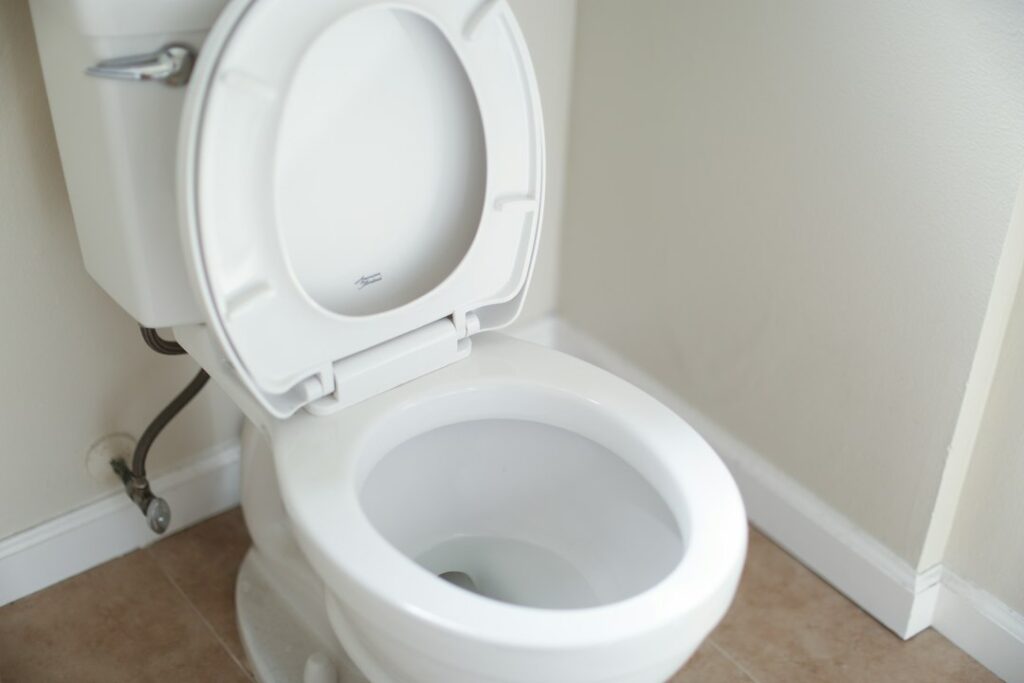
If your toilet starts bubbling or gurgling while the shower is running, the toilet itself may not be the real problem. The sound usually means air is being pushed or pulled through the drainage system because water and air are not moving through the pipes normally.
The most common possibilities are a partial drain blockage, a restricted plumbing vent, or a larger problem farther down the shared drain line. The pattern matters: a single brief bubble is different from repeated gurgling, slow drains, sewage odors, or water backing up into another fixture.
Why the shower can make the toilet bubble
Your plumbing system needs both drainage and ventilation. Wastewater flows down the drain while vent pipes allow air pressure to equalize. If a drain or vent is restricted, water from the shower can change the pressure inside the shared piping. The toilet bowl may then become the easiest place for trapped air to escape, producing bubbles or a gurgling sound.
Most likely causes
1. A partial clog in a shared drain
A partial blockage can still let water pass, but not freely enough to handle normal flow. Hair, soap residue, paper, and other debris can narrow a drain. When the shower sends more water into the system, displaced air may travel toward the toilet.
2. A blocked or restricted plumbing vent
Plumbing vents help stabilize pressure in drain lines. Leaves, debris, nests, ice in cold climates, or damage can restrict a roof vent. A vent problem can cause gurgling, changing toilet-bowl water levels, slow drainage, and drain odors.
3. A developing main drain or sewer-line problem
If several fixtures are slow or noisy at the same time, the restriction may be farther downstream. Treat water backing up into a tub or shower, sewage odors, or multiple affected drains as warning signs rather than isolated toilet trouble.
What to check first
- Run the bathroom sink and watch the toilet bowl for movement or bubbles.
- Check whether the shower, sink, or another nearby drain is unusually slow.
- Listen for gurgling from more than one fixture.
- Notice whether the toilet water level rises or falls after another fixture drains.
- Pay attention to sewage-like odors or any backup.
Can you fix it yourself?
If the issue appears limited to one fixture, basic drain troubleshooting may help. Avoid repeatedly adding harsh chemical drain cleaners, especially when you do not know where the restriction is. A plumbing vent is normally accessed from the roof, which adds fall risk and is not a good DIY step for many homeowners.
If multiple drains are affected, the toilet bubbles every time the shower runs, or wastewater begins backing up, a plumber can determine whether the restriction is in a branch drain, vent, or main line.
When the bubbling is urgent
Stop treating the problem as a harmless noise if sewage backs up, several fixtures stop draining normally, strong sewer odors appear, or the toilet threatens to overflow. Those signs can indicate a more significant blockage that should be diagnosed promptly.
Bottom line
A toilet that bubbles when the shower runs is often telling you that the drain system is struggling to move water and air normally. Check for slow or affected fixtures first. If the symptom involves several drains or keeps returning, the underlying drain or vent problem is more important than the toilet noise itself.