
Appliance problems are often attributed to age. When a machine has been in use for years, changes in performance or reliability are quickly explained as the natural result of getting older. This explanation can feel logical and even relieving. It is often worth slowing down here, because age can hide other causes that behave very differently.
This article examines situations where age becomes a convenient explanation while the real cause lies elsewhere. Comparing these possibilities can help prevent decisions based on assumptions rather than observation.
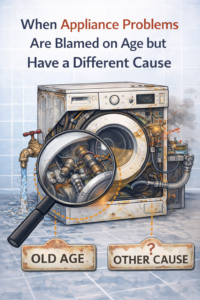
Why Age Becomes the Default Explanation
Age is visible and easy to understand. An older appliance carries an expectation of decline, so new issues seem unsurprising. This expectation reduces the need to ask detailed questions about what actually changed.
Because age affects everything over time, it feels like a complete answer. Pausing to ask whether age explains the specific behavior being observed can reveal gaps in that assumption.
Age describes time passed, not necessarily the problem itself.
How Age Masks Specific Triggers
Many problems blamed on age begin after a particular change. A shift in usage, environment, or surrounding systems may occur quietly. When the appliance is already old, these triggers can be overlooked.
Instead of being seen as a response to a change, the issue is folded into the aging narrative. Slowing down to identify what happened before the problem appeared can help separate age from cause.
Timing often matters more than years of use.
Comparing Age-Related Wear to Other Causes
True age-related wear tends to be gradual and predictable. Performance slowly declines, tolerances loosen, and efficiency decreases in relatively stable ways.
Other causes behave differently. They may appear suddenly, fluctuate, or affect only certain functions. When behavior does not match steady decline, pausing to compare patterns can help identify whether age is really the driver.
Not all deterioration follows the same rhythm.
Why Older Appliances Get Less Scrutiny
Once an appliance is labeled “old,” attention often drops. Problems are expected, so they receive less investigation. This can allow other causes to persist unnoticed.
Ironically, newer appliances with the same symptoms might receive more careful evaluation. Slowing down to give older appliances equal scrutiny can prevent misinterpretation.
Expectation shapes attention.
Environmental and System Changes That Mimic Aging
Changes outside the appliance can create age-like symptoms. This is similar to situations where a washing machine problem isn’t the washer at all, but an external system influencing behavior. Floor movement, plumbing shifts, electrical variations, or ventilation issues can all affect performance.
When these changes happen gradually, they blend into the idea of aging. Pausing to look beyond the appliance itself can reveal influences that age alone cannot explain.
The appliance often reacts to its surroundings.
When Age Explains Part, Not All, of the Problem
Age does play a role in many issues. Materials fatigue, seals harden, and margins shrink. The problem arises when age is treated as the only cause.
Often, age makes the appliance more sensitive to other stresses. Slowing down to ask what age has enabled, rather than what age has caused, can refine understanding.
Age sets the stage; it does not write the script alone.
How Misattributing Problems to Age Changes Decisions
When age is blamed, decisions often move quickly toward acceptance or replacement. Repairs may feel unnecessary, or continued use may feel justified without deeper assessment.
These choices can be reasonable, but they are shaped by the assumption of age as cause. This assumption helps explain why appliance problems often escalate after seeming stable for months without reevaluation. Pausing before locking into that assumption can keep alternatives visible.
Diagnosis influences direction.
Signs That Age May Not Be the Real Cause
Certain behaviors should prompt reconsideration. Rapid changes, inconsistent performance, or issues that affect only one function often point beyond general aging.
When behavior shifts faster than expected, slowing down to reassess can prevent missing a more specific explanation.
Age-related decline is usually steady, not erratic.
When Reassessment Is Worth the Pause
If an appliance labeled “just old” begins behaving in new or unpredictable ways, reassessment matters. Continuing to rely on age as the explanation can increase risk.
Reassessment does not require immediate action. It can simply mean slowing down and acknowledging that something else may be influencing the situation.
A pause can reopen understanding.
FAQ
Why do people blame appliance problems on age so quickly?
Because age feels obvious and familiar. Pausing to question that familiarity can reveal overlooked causes.
Can age and another cause exist at the same time?
Yes. Age often makes appliances more vulnerable to other issues. Slowing down helps identify how they interact.
What behaviors don’t fit normal aging?
Sudden changes, inconsistency, or isolated failures. These patterns suggest looking beyond age.
Is replacing an old appliance always the right response?
Not always. When age is assumed rather than examined, other factors may be missed. Doing less and reassessing can clarify next steps.