
Moisture from appliances is often treated as a surface problem. A damp area is dried, a small leak is wiped up, and normal use resumes. When nothing obvious seems wrong afterward, it is easy to assume the situation is resolved. It is often worth slowing down here, because repeated moisture exposure can affect structural elements long before visible damage appears.
Hidden structural issues rarely come from a single event. They develop through repetition, absorption, and gradual weakening. Understanding this process helps explain why serious problems can exist even when surfaces look mostly unchanged.
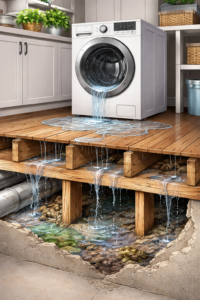
Why Repeated Moisture Is More Dangerous Than Single Leaks
A one-time spill or leak may dry without lasting impact. Materials can tolerate occasional exposure and return close to their original condition. The risk increases when moisture appears again and again.
Repeated exposure prevents full drying. Each event leaves behind small changes—softening, swelling, or reduced strength—that compound over time. Slowing down to consider frequency, not just severity, can help reveal why repetition matters so much.
Structures fail from accumulation more often than from accidents.
How Moisture Reaches Structural Components
When moisture escapes from an appliance, it usually contacts finishes first. Flooring, baseboards, or surface materials may absorb or deflect some water. What remains can migrate deeper. This process often begins the same way appliance leaks damage floors before you notice any visible surface change.
Subfloors, wall framing, and support members are often made of materials that absorb moisture readily. These components are rarely visible, which allows damage to progress unnoticed. Pausing to think about what lies beneath surfaces can clarify how structural issues begin.
Damage often starts where visibility ends.
Why Structural Damage Stays Hidden for So Long
Structural components are designed to carry loads quietly. They can lose some strength without immediate signs at the surface. Floors may still feel solid, and walls may look straight.
Because there is no clear signal early on, moisture-related weakening can continue unchecked. Slowing down expectations about when damage should become visible can prevent false reassurance.
Silence does not mean stability.
How Moisture Changes Material Behavior Over Time
Repeated moisture alters how materials respond to stress. Wood fibers may compress or separate, fasteners may loosen their grip, and joints may shift slightly. These changes affect how loads are distributed.
As distribution changes, stress concentrates in fewer areas. This makes the structure more vulnerable even if nothing dramatic has happened yet. Pausing to recognize gradual behavioral changes can help explain later failures.
Materials remember what moisture does to them.
Why Problems Often Appear Far From the Appliance
Structural elements are interconnected. A weakened section beneath an appliance can shift loads to adjacent areas. Over time, issues may surface where stress increases, not where moisture first appeared.
This displacement can make diagnosis confusing. This spread mirrors why appliance water damage often spreads beyond the immediate area rather than remaining localized. Slowing down before assuming a new, unrelated problem can help reconnect symptoms to earlier moisture exposure.
The visible issue is not always at the source.
How Drying Between Events Creates False Confidence
If moisture dries between appliance uses, it can feel like no harm is being done. Surfaces look normal, and there is no ongoing dampness.
However, partial drying does not reverse structural changes. Each cycle can leave materials slightly weaker than before. Pausing to question whether drying equals recovery can prevent underestimating risk.
Dry does not always mean restored.
Why Structural Issues Escalate Suddenly
Hidden damage often becomes obvious quickly once a threshold is crossed. Floors may sag, walls may crack, or alignment may change with little warning.
This sudden appearance can feel alarming, but it usually reflects long-term progression. This pattern explains why appliance damage rarely stays at the same severity level before becoming obvious. Slowing down to reframe “sudden” as delayed can make the timeline easier to understand.
The reveal is abrupt; the cause is not.
When Doing Less Can Limit Further Damage
When moisture exposure is suspected, the instinct is often to continue normal use while watching for signs. In some cases, reducing use or pressure can slow further weakening while understanding catches up.
Doing less does not fix existing damage, but it can prevent acceleration. Pausing can preserve options rather than forcing decisions under pressure.
Restraint can buy clarity.
Why Early Awareness Matters More Than Early Action
Structural issues tied to moisture are difficult to reverse once advanced. Early awareness allows for more measured responses, even if no immediate action is taken.
Slowing down to notice patterns, repetition, and subtle changes can matter more than reacting to a single event. Awareness shapes timing, not panic.
Understanding comes before intervention.
FAQ
How can appliance moisture affect structure without visible damage?
Moisture can reach hidden components and weaken them gradually. Pausing to consider what is unseen explains the delay.
Is repeated small moisture exposure really a risk?
Yes. Repetition prevents full recovery. Slowing down focus from size to frequency helps clarify impact.
Why do structural problems seem to appear suddenly?
Because weakening accumulates quietly until a limit is crossed. The process is slow; the outcome is fast.
What’s the safest response when unsure?
Restraint and observation. Doing less while reassessing can reduce the chance of accelerating hidden damage.