
Stains that disappear during cleaning and then return as the fabric dries are among the most frustrating problems with couch maintenance. The area looks clean while damp, creating the impression that the cleaning worked, only to reveal the same discoloration—or sometimes a worse one—once the moisture has evaporated. This reappearance isn’t about the cleaning failing; it’s about what was happening beneath the surface, where moisture was moving residue around rather than removing it, or where deeper saturation was temporarily masked by the water itself.
Why This Stain Is Difficult
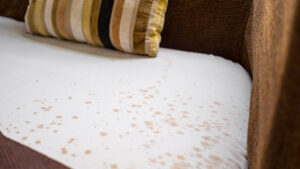
Reappearing stains signal that the problem was never just on the surface. Something deeper—in the padding, in the fabric’s base layers, or in residue that wasn’t extracted—is causing the discoloration to return. The visual feedback during cleaning is misleading because wet fabric looks different than dry fabric, and moisture can temporarily darken or lighten areas in ways that hide the true state of the stain. Once the water evaporates, whatever was dissolved or suspended in it either resurfaces or concentrates at the edges of the wet zone, recreating the mark. Because the stain wasn’t actually removed the first time, repeating the same cleaning method usually produces the same result, and each attempt can make the underlying problem harder to address.
Understanding the Fabric First
Some fabrics are more prone to reappearing stains because of how they’re constructed or how they interact with moisture. Multi-layer materials—fabric over batting over foam—create pathways for moisture to travel through, and as it moves, it can carry dissolved stain components with it. This reflects what happens inside a couch when moisture moves through internal layers. Dense weaves can trap residue deep in their structure where surface cleaning can’t reach, and that residue continues to release color or oils as the fabric cycles between wet and dry. Natural fibers like cotton and linen can wick moisture and dissolved materials through their length, depositing stains at the surface even when the source is inches below. If the fabric has any kind of backing or coating, moisture can become trapped between layers, and as it slowly evaporates, it pulls stain material upward from the padding. Older fabrics may have lost their original finish or structure, making them more absorbent and more likely to develop wicking problems that weren’t present when the couch was new.
Why Stains Seem Removed While Wet But Return After Drying
Moisture changes how fabric looks, often darkening the entire area so that a stain blends in with the surrounding dampness. This creates the illusion that the discoloration has been lifted when it’s actually just hidden by the water. As the fabric dries, the moisture evaporates from the surface first, but deeper layers remain damp longer. If any stain material is dissolved in that moisture—oils, dyes, dirt, cleaning residue—it travels upward with the evaporating water and deposits at the surface, recreating the mark. The stain that reappears might not even be in exactly the same spot; it can shift slightly or expand as moisture movement redistributes the dissolved material. Some stains also become more visible when the fabric is dry because the material reflects light differently, revealing discoloration that was always present but not apparent while wet.
How Moisture Movement Redistributes Rather Than Removes Stains
When water is applied to a stain, it doesn’t automatically lift the stain material out of the fabric. Instead, it dissolves or suspends it, and then the dissolved material travels wherever the water goes. If the water spreads outward through the fabric, the stain spreads with it. If the water soaks downward into padding, the stain follows. As the moisture begins to evaporate, it moves toward the surface, and whatever is dissolved in it concentrates at the point of evaporation. This creates a ring or halo effect where the stain material is deposited at the edges of the wet zone, often making the mark larger or more defined than it was originally. If the padding underneath absorbed stain material during the initial spill or during previous cleaning attempts, moisture from new cleaning can pull that material back up through the fabric, causing the stain to reappear even if the surface was clean before the latest cleaning.
Why Internal Saturation Causes Delayed Reappearance
The visible stain on the surface is often only part of the problem. Padding and backing materials can hold stain components that aren’t apparent until moisture passes through them. If a spill soaked through to the foam when it originally occurred, that foam might still contain oils, dyes, or organic matter that release back into the fabric when moisture is introduced. This internal saturation means that surface cleaning can temporarily remove the visible mark, but as the fabric dries and moisture moves through the padding, the stain resurfaces from below. Some materials also release their own compounds when wet—dyes from the fabric, adhesives from backing, breakdown products from foam—and these can create or intensify stains that weren’t related to the original spill. The delay between cleaning and reappearance can be hours or days, depending on how long it takes for the internal moisture to reach the surface and evaporate.
Why Cleaning Residue Contributes to Reappearing Stains
If cleaning agents weren’t fully extracted during the first attempt, they remain in the fabric and can cause staining on their own. As residue dries, it can darken or attract dirt, creating a mark that looks like the original stain but is actually new discoloration from the cleaning product. Some residues also react with stain materials that are still present, forming compounds that are more visible or more persistent than the original stain was. If the fabric has been cleaned multiple times, layers of different products might be present, and introducing new moisture can reactivate or redistribute these old residues, causing stains to appear in areas that weren’t originally affected. The interaction between cleaning agents, stain materials, and fabric dyes can also create color changes that develop slowly as the fabric dries, making it seem like the stain is returning when it’s actually a new chemical reaction occurring.
Why Repeated Cleaning Makes the Problem Worse
The logic that cleaning again will eventually remove a reappearing stain assumes that the problem is simply incomplete removal, but the reality is usually more complex. Each cleaning attempt introduces new moisture that travels through the fabric and padding, potentially spreading stain material further or pulling up new residue from below. If the stain is reappearing because of internal saturation, surface cleaning will never reach the source, and repeated efforts just cycle moisture through the fabric without progress. Each drying cycle also concentrates dissolved materials at the surface, so multiple cleaning attempts can actually make the stain darker or more defined as layers of residue and stain material accumulate. This is why some couch stains appear worse after cleaning rather than better. The fabric itself can also degrade from repeated wetting and drying, becoming more prone to staining or developing permanent texture and color changes that remain even if the original stain is eventually removed.
Why Waiting Is Often More Revealing Than Acting
A stain that reappears after drying might continue to change for several days as the fabric and padding fully dry and as moisture finishes migrating through the layers. Acting immediately after noticing the reappearance can mean cleaning fabric that’s still damp internally, which just restarts the moisture movement cycle without allowing time to see the full extent of the problem. Waiting several days—or even a week for thick padding—allows the couch to reach a stable dry state where the true nature of the stain becomes clear. Some stains also fade slightly on their own as residual moisture evaporates completely, and what looks severe immediately after drying might be less noticeable once the fabric has had time to settle. This waiting period also provides time to observe whether the stain is stable or continuing to worsen, which affects whether cleaning is likely to help or just introduce more variables.
Fabric Types That Require Extra Caution
Microfiber is particularly prone to reappearing stains because its dense weave traps moisture and dissolved materials, releasing them slowly as the fabric dries. Velvet and fabrics with pile can show wicking effects where moisture travels along the fibers, depositing stain material in visible lines or patterns. Cotton and linen are highly absorbent and can pull stain components from padding up through their weave, making internal saturation a frequent cause of reappearance. Any fabric with multiple layers—quilted surfaces, attached batting, or decorative backing—creates opportunities for moisture to become trapped between layers where it continues to move stain material long after the surface seems dry. Fabrics with stain-resistant treatments can develop reappearing stains if the treatment has been compromised, because moisture and stain material can penetrate the base fabric but then become trapped by the damaged coating as they try to evaporate. Before attempting another cleaning, consider whether the fabric’s construction suggests the stain is coming from below rather than from incomplete surface removal.
When Stopping Is the Safer Choice
If a stain has reappeared after cleaning, repeating the same method is unlikely to produce different results. The reappearance itself is information—it indicates that the stain is deeper than surface treatment can reach, that moisture movement is redistributing material rather than removing it, or that cleaning residue is contributing to the problem. Continuing to clean can spread the stain further, push it deeper, introduce more residue, or damage the fabric through repeated moisture exposure. Some reappearing stains are permanent results of dye loss or fabric damage rather than removable substances, and further cleaning will only make the affected area more obviously different from the surrounding material. If the stain has reappeared multiple times after cleaning attempts, the problem is almost certainly internal saturation or a permanent fabric change that won’t respond to additional surface treatment. It’s also reasonable to assess whether the stain is worsening with each cleaning attempt, which would indicate that the cleaning itself is causing more harm than the original problem.
FAQ
Why does the stain look gone when the couch is wet?
Moisture darkens fabric, making stains blend in with the surrounding dampness. The stain might still be present but not visible until the fabric dries and color differences become apparent again.
Why does the stain come back in the same spot?
The stain material is likely deeper in the fabric or padding than surface cleaning can reach. As moisture from cleaning evaporates upward, it carries dissolved stain components with it and deposits them at the surface where they’re visible again.
Can a stain reappear even if the original spill was cleaned immediately?
Yes. If the spill soaked into padding before it was cleaned, the padding retains stain material that can resurface when moisture passes through it during later cleaning attempts.
Why does the stain sometimes look worse after it reappears?
Moisture movement can spread the stain or concentrate it at the edges of the wet zone. Cleaning residue can also layer on top of the original stain, or moisture can activate additional discoloration from padding or fabric dyes.
Should I clean the stain again as soon as it reappears?
Waiting several days for the fabric and padding to fully dry reveals whether the stain is stable or still changing. Cleaning while the couch is still internally damp often just restarts the moisture movement cycle without improvement.
How many times should I try cleaning before accepting the stain is permanent?
If the stain has reappeared after one thorough cleaning and complete drying, additional attempts are unlikely to succeed and more likely to spread the problem or damage the fabric. Reappearance usually indicates internal saturation that surface methods can’t address.