
Couch stains have a way of creating immediate panic. Something spills, a mark appears, and the instinct is to grab the nearest cleaning product and start scrubbing before it sets. But that urgency—that feeling that you have only minutes to act—often leads to far worse outcomes than the original stain. Fabrics react unpredictably to water, heat, and chemicals. What looks like a simple cleaning task can turn into a spreading watermark, a bleached spot, or a texture change that becomes permanent. Sometimes the stain itself is less damaging than the attempt to remove it. The hardest part of dealing with couch stains isn’t knowing what to use, but recognizing when doing nothing at all might actually preserve more of what you’re trying to protect.
Understand the Material First
Before touching a stain with anything—water, cleaner, or even a dry cloth—you need to know what the couch is made of. This sounds obvious, but most couch damage doesn’t come from the stain itself. It comes from using a method that’s incompatible with the fabric. A microfiber couch and a linen couch may look similar under certain lighting, but they respond to moisture in completely different ways. Silk, velvet, rayon blends, and certain synthetics can watermark, shrink, or lose their finish when exposed to even small amounts of liquid.
Most couches have a cleaning code tag tucked under a cushion or along the platform. W means water-based cleaners are generally safe. S means solvent-only, which rules out water entirely. WS allows either, and X means vacuum only—no liquids of any kind. If you can’t find the tag, or if it’s faded or missing, you’re working blind. Guessing the fabric type based on appearance is unreliable, and many modern couches use blended materials that don’t behave the way you’d expect. There are moments when the safest move is to step back and accept that without clear information, any cleaning attempt is more likely to create a new problem than solve the existing one.
Even if you know the fabric, the age and condition of the couch matter. Older upholstery can have weakened fibers, faded dye, or a protective finish that’s already deteriorated. A cleaning method that works on a new couch might strip color or damage texture on one that’s been used for years. If there’s any doubt about how the fabric will respond, it’s worth questioning whether the stain is truly worse than the risk you’re about to take.
Safe Methods That Often Work
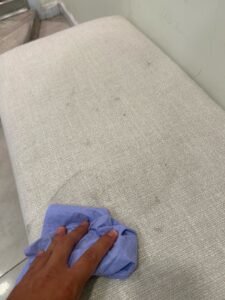
If the fabric tolerates water and the stain is fresh, blotting with a clean, barely damp cloth can sometimes lift liquid before it bonds with the fibers. The key is pressing gently without rubbing. Rubbing pushes the stain deeper and spreads it outward, which is why so many small spills turn into large discolored patches. But even blotting has limits. If the stain doesn’t lift after a few careful presses, continuing often just adds moisture to the fabric without improving the result. At that point, more blotting starts to feel productive, but it’s usually just redistributing the problem.
Mild dish soap diluted heavily in water works on some water-safe fabrics, particularly for greasy stains. The idea is to use as little soap as possible—a single drop in a cup of water—and apply it sparingly with a cloth. Too much soap leaves a residue that attracts dirt later, and rinsing it out without overwetting the cushion is difficult. If the stain doesn’t respond quickly, adding more soap or scrubbing harder rarely helps. It just embeds the soap deeper into the padding, where it stays long after the surface dries.
For dry-clean-only fabrics, some people use rubbing alcohol on a cotton ball for ink or dye stains. Alcohol evaporates faster than water, which reduces the risk of watermarks. But it can also strip color from certain dyes, especially on darker fabrics or older upholstery. Testing it on a hidden spot first is essential, and even then, results can vary across different areas of the same couch. If the test spot shows any color transfer or texture change, it’s a sign that continuing could make the visible area worse than the original stain.
Baking soda is often suggested for absorbing oil or odor, and it does work on some materials. Sprinkling it on a fresh stain and letting it sit for several hours can pull moisture out of the fibers. But baking soda also clings to certain textures, especially microfiber or velvet, and vacuuming it out completely can be difficult. What’s left behind creates a gritty residue that dulls the fabric. If the powder doesn’t lift easily after the first vacuuming pass, forcing it with a brush attachment might grind it further into the weave.
Common Mistakes to Avoid
The most frequent mistake is assuming that more effort equals better results. When a stain doesn’t budge, the natural response is to scrub harder, add more cleaner, or switch to a stronger product. But upholstery fabric isn’t designed to withstand aggressive cleaning. The fibers are often loosely woven or brushed to create texture, and forceful scrubbing flattens that texture permanently. What starts as a stain becomes a shiny, matted patch that catches light differently from the rest of the couch. Even if the discoloration fades, the texture damage remains visible.
Using heat to speed up drying is another well-intentioned mistake. Hair dryers, irons, or placing the couch near a heater might seem like a way to prevent watermarks, but heat sets certain stains—especially protein-based ones like blood or food. It can also cause dyes to migrate or fabrics to shrink unevenly. A damp cushion that might have dried safely overnight can develop a permanent ring or pucker when exposed to direct heat. The urgency to dry the fabric quickly often creates the exact problem it was meant to prevent.
Over-the-counter upholstery cleaners vary widely in strength, and many are far harsher than their labeling suggests. Products marketed as “safe for all fabrics” still contain solvents or surfactants that react unpredictably with certain materials. Spraying a cleaner directly onto the couch without testing it first is a gamble. If the fabric reacts badly—by lightening, stiffening, or developing a halo around the treated area—there’s no way to reverse it. The stain may be gone, but the damaged spot becomes a permanent fixture.
Steam cleaners appeal to people looking for a chemical-free option, but steam introduces a significant amount of moisture deep into cushions. If the padding doesn’t dry completely, mold and mildew can develop inside the couch where it’s invisible until the smell becomes obvious. Even if the surface dries within a few hours, the internal layers may stay damp for days. Steam works well on some materials, but on others, it’s an irreversible mistake disguised as a gentle solution.
When to Stop and Call a Professional
If a stain spreads after your first attempt, that’s a clear signal to stop. Spreading usually means the cleaning method is incompatible with the fabric or that you’re adding too much moisture. Continuing at that point rarely fixes the spread—it just makes the affected area larger. Professional cleaners have tools to extract moisture and treat fabrics in ways that minimize further damage, but only if the fabric hasn’t already been altered by multiple home treatments.
Large stains, especially those covering more than a cushion or two, are difficult to clean evenly at home. Even if one section improves, mismatched cleaning across different areas of the couch creates visible borders where treated and untreated fabric meet. Professionals can clean the entire piece uniformly, which avoids the patchwork effect that makes a couch look worse than it did with the original stain.
Stains on vintage, delicate, or expensive couches carry higher stakes. A mid-century velvet sofa or a custom-upholstered piece isn’t something you can easily replace, and a single bad cleaning attempt can destroy its value and appearance. When the couch itself is irreplaceable, the cost of professional cleaning is almost always less than the cost of living with permanent damage—or replacing the piece entirely.
If you’ve already tried multiple methods and the stain persists, adding more products on top of what’s already been used makes a professional’s job harder. Layered chemicals react with each other in unpredictable ways, and some residues prevent later treatments from working. At a certain point, the couch has been exposed to so much that calling a professional becomes less about removing the stain and more about assessing whether the fabric is still salvageable.
Final Thoughts
There’s no one method that works safely on every couch, and pretending otherwise leads to costly mistakes. Fabrics differ, stains differ, and the condition of the upholstery itself creates variables that no general advice can fully account for. The urge to act immediately is understandable, but speed isn’t the same as effectiveness. Many stains are survivable if left alone; many couches are not survivable after aggressive home treatment. Knowing when to pause, when to test cautiously, and when to accept that professional help is the only reasonable option—that judgment matters far more than any specific cleaning trick. Sometimes protecting what you have means resisting the impulse to fix it yourself.